Traditional Ghee
Slow simmering turns butter into a clear golden cooking fat as its milk solids toast to light brown. Watch the pan near the end for the nutty aroma and rich color that distinguish traditional ghee.
Recipe link
Prep time5 min
Cook time35 min
Total time1 HOUR 15 MINUTES
- Course
- Condiments, Cooking Fats
- Cuisine
- Indian
- Difficulty
- Easy
- Est. calories / serving
- 120
Ingredients
- 1 pound high-quality unsalted butter (preferably cultured butter, cut into cubes)
Instructions
Instructions
- Prepare the Equipment: Make sure the saucepan, strainer, cheesecloth, spoon, and storage jar are completely clean and dry. Even a small amount of water can cause hot butterfat to sputter.clean, dry equipment
- Melt the Butter: Add the cubed butter to a deep, heavy-bottomed saucepan. Melt over medium-low heat without covering the pan.1 lb unsalted butter
- Begin the Simmer: Once fully melted, reduce the heat to low. Let the butter simmer gently. It will develop a thick layer of foam and begin sputtering as its water evaporates.melted butter
- Continue Cooking: Simmer uncovered for 20–30 minutes. Stir only occasionally and gently so you can continue monitoring the milk solids at the bottom of the saucepan.simmering butter
- Watch the Changes: As the water evaporates, the bubbling will become quieter, the foam will thin, and the butterfat beneath it will become clear and golden. Milk solids will collect on the bottom of the pan.separated butterfat and milk solids
- Brown the Milk Solids: Continue cooking over low heat until the solids on the bottom turn light golden brown and the butter smells toasted and nutty. Do not let the solids become dark brown or black.lightly browned milk solids
- Stop the Cooking: Remove the saucepan from the heat immediately. Let it stand for 3–5 minutes. The residual heat will continue browning the solids slightly.finished hot ghee
- Strain the Ghee: Line a fine-mesh strainer with several layers of cheesecloth or an unbleached coffee filter. Carefully pour the ghee into a clean, dry, heat-safe glass jar, leaving the browned solids behind.strained ghee
- Cool Completely: Let the ghee cool uncovered until it reaches room temperature. It will change from clear golden liquid to an opaque or lightly grainy golden fat as it cools.cooled ghee
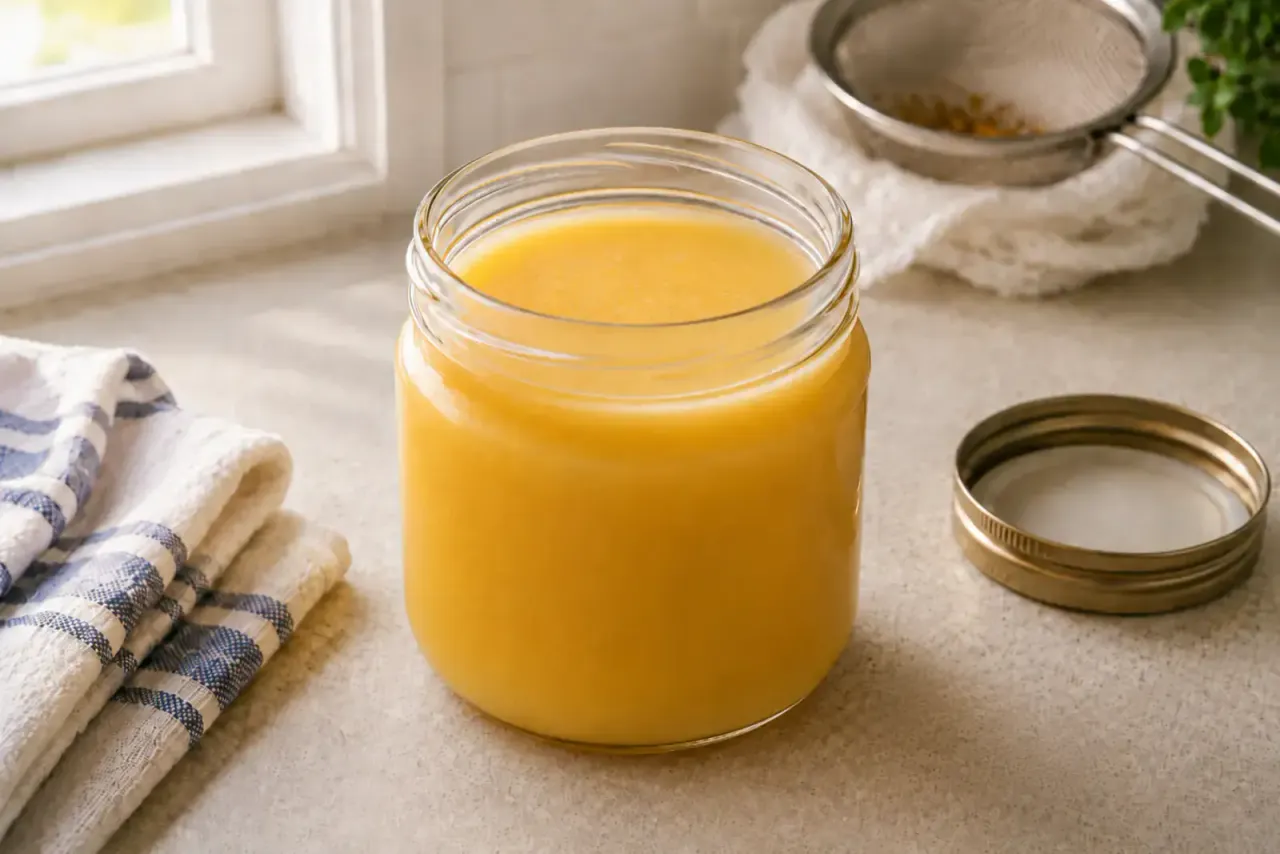
- Seal and Store: Once completely cool, cover the jar tightly. Always use a clean, dry spoon when removing ghee from the container.finished traditional ghee
Notes
- Ghee Versus Clarified Butter: Ghee cooks beyond the clarified-butter stage. Its milk solids are allowed to turn light brown before straining, which creates its deeper golden color and nutty flavor.
- Butter Choice: Unsalted cultured butter produces a fuller, more complex ghee. Regular unsalted sweet-cream butter also works and produces a cleaner flavor.
- Use a Deep Pot: Butter foams considerably as its water evaporates. A deep saucepan helps prevent overflow and splattering.
- Do Not Judge by Time Alone: Pan size, burner strength, butter composition, and batch size all affect the cooking time. Watch for clear golden fat, quieter bubbling, browned solids, and a nutty aroma.
- Carryover Cooking: Ghee continues cooking after the saucepan leaves the heat. Remove it when the solids are light brown rather than waiting until they become dark.
- Burned Ghee: Black milk solids or a harsh, acrid smell indicate that the ghee has burned. Unfortunately, that bitterness cannot be removed by straining.
- Surface Foam: You may skim heavy foam if it prevents you from seeing into the pan, but it is not necessary to remove every trace because the ghee will be filtered at the end.
- Straining: Cheesecloth gives a clean result. An unbleached coffee filter produces an especially clear ghee but drains more slowly.
- Not Guaranteed Dairy-Free: Most milk solids are removed, but homemade ghee should not be considered completely free of milk proteins unless it has been specifically tested.
- Storage: Store in a clean, dry, tightly sealed jar. It can be kept in a cool, dark pantry for up to 3 months when all moisture and milk solids have been removed, or refrigerated for up to 1 year. Discard it if it develops mold, an off odor, or signs of moisture contamination.
- Using Ghee: Use for frying, sautéing, roasting, blooming spices, curries, rice, lentils, eggs, vegetables, grilled meats, seafood, popcorn, or brushing over flatbreads.
- Serving Suggestions: Use with Indian curries, dal, biryani, roasted vegetables, fried eggs, grilled chicken, steak, shrimp, rice, naan, paratha, or popcorn.
Nutrition (Approximate Per Serving)
Yield
About 1⅔ cups traditional ghee — Serving size: 1 tablespoon
- Calories
- 120
- Carbohydrates
- 0 g
- Protein
- 0 g
- Fat
- 14 g
- Saturated Fat
- 9 g
- Polyunsaturated Fat
- 0.5 g
- Monounsaturated Fat
- 4 g
- Cholesterol
- 36 mg
- Sodium
- 1 mg
- Potassium
- 1 mg
- Fiber
- 0 g
- Total Sugars
- 0 g
- Vitamin A
- 425 IU
- Vitamin C
- 0 mg
- Calcium
- 0 mg
- Iron
- 0 mg
Equipment
- Deep, heavy-bottomed saucepan
- Heat-resistant spoon
- Fine-mesh strainer
- Cheesecloth or unbleached coffee filter
- Heat-safe glass storage jar with lid
- Measuring cup with pouring spout (optional)