Whipped Cultured Butter
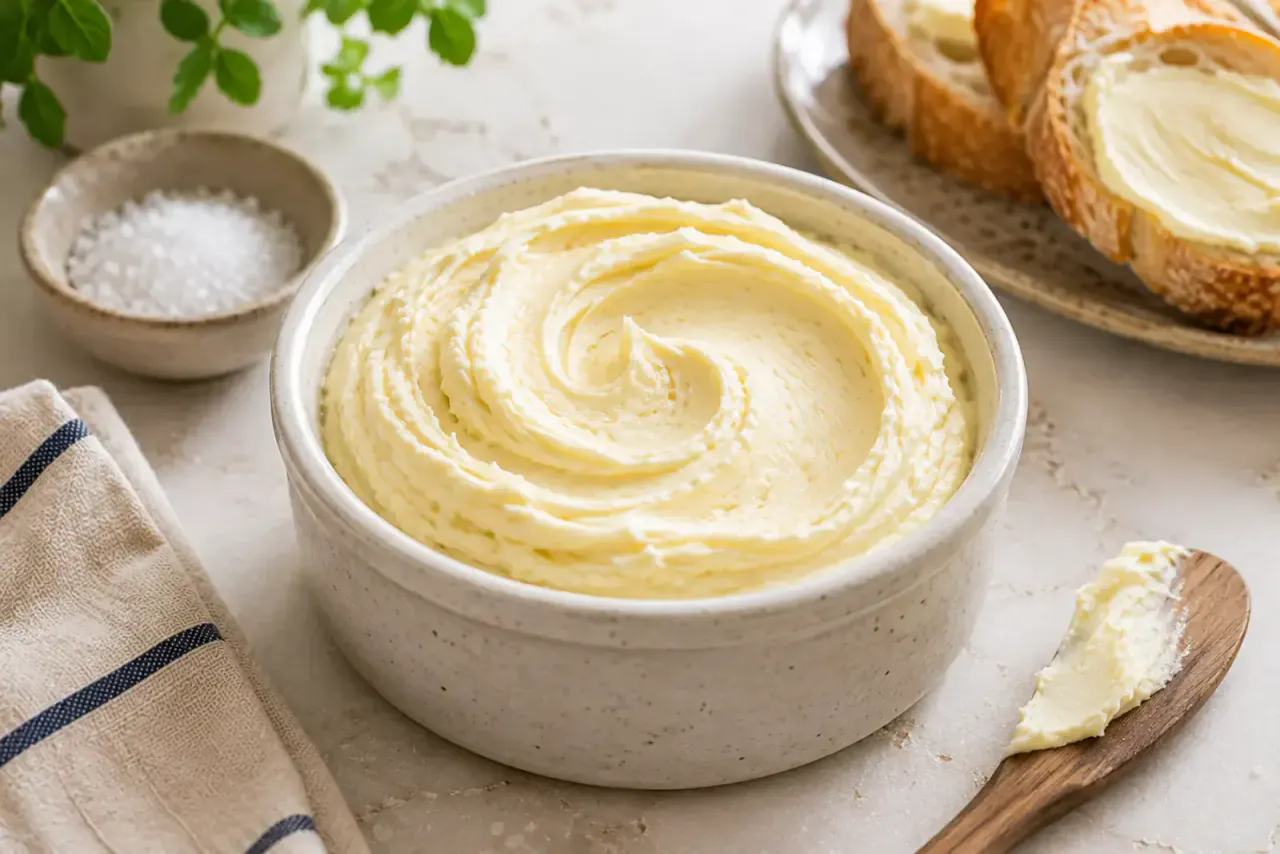
Cream cultured with buttermilk develops a gentle tang before it is churned, washed, and salted. A final whip makes this homemade butter pale, airy, and ready to spread on warm bread.
Recipe link
Prep time40 min
Cook time0 min
Total time20–28 HOURS
- Course
- Condiments, Spreads
- Cuisine
- European, French Inspired
- Difficulty
- Medium
- Est. calories / serving
- 87
Ingredients
Cultured Cream
- 4 cups high-quality heavy cream (pasteurized, preferably not ultra-pasteurized and without gums or stabilizers)
- 3 tablespoons cultured buttermilk (with live active cultures)
Finished Whipped Butter
- ½ teaspoon fine sea salt
- 4–6 cups ice water (for washing the butter)
Optional Finish
- flaky sea salt
Instructions
Instructions
- Sanitize the Equipment: Wash the culturing container, mixer bowl, utensils, strainer, and storage containers thoroughly with hot, soapy water. Rinse and dry completely.clean butter-making equipment
- Culture the Cream: Pour the heavy cream into a clean 2-quart glass container. Stir in the cultured buttermilk until evenly combined, then cover the container.4 cups heavy cream, 3 tbsp cultured buttermilk
- Ferment the Cream: Let the cream stand at a steady room temperature of approximately 70–75°F for 18–24 hours. It is ready when visibly thickened with a clean, pleasantly tangy aroma and a consistency similar to loose crème fraîche.cultured cream
- Chill for Churning: Refrigerate the cultured cream for about 1 hour, or until it reaches approximately 55–60°F. It should feel cool but remain fluid enough to churn.chilled cultured cream
- Prepare the Mixer: Transfer the cultured cream to the bowl of a stand mixer fitted with the whisk attachment. Loosely cover the mixer with a clean kitchen towel or attach a splash guard.chilled cultured cream
- Churn the Butter: Beat on medium-high speed. The cream will first become whipped cream, then look grainy and curdled. Reduce the speed as the butter separates and continue mixing until yellow butterfat gathers together and distinct liquid buttermilk remains, about 5–10 minutes.cultured cream
- Drain the Buttermilk: Pour the mixture through a fine-mesh strainer set over a bowl. Press the butter gently with a rubber spatula to release as much cultured buttermilk as possible. Reserve the buttermilk for another use.churned butter, cultured buttermilk
- Wash the Butter: Transfer the butter to a clean mixing bowl and add approximately 1 cup ice water. Press and fold the butter firmly against the side of the bowl with a spatula or butter paddle.churned butter, 1 cup ice water
- Repeat the Washing: Drain the cloudy water and add fresh ice water. Continue pressing, folding, draining, and replacing the water until it remains clear, usually 4–6 washes.remaining ice water
- Remove the Moisture: Drain the final wash completely. Press and fold the butter repeatedly until no visible water or milky liquid is released. Blot the bowl and surface of the butter with a clean lint-free towel as needed.washed cultured butter
- Add the Sea Salt: Sprinkle the fine sea salt evenly over the butter. Knead and fold until the salt is fully distributed.½ tsp fine sea salt
- Temper the Butter: Transfer the butter to a clean mixer bowl. Let it rest at room temperature until cool and pliable, ideally about 60–65°F. The butter should indent easily when pressed but should not appear shiny, oily, or partially melted.salted cultured butter
- Smooth the Butter: Fit the stand mixer with the paddle attachment. Beat the butter on medium speed for 1–2 minutes, scraping down the bowl several times, until completely smooth and free of dense lumps.tempered cultured butter
- Whip the Butter: Switch to the whisk attachment. Beat on medium-high speed for 3–5 minutes, scraping down the bowl once or twice, until the butter becomes pale, airy, and noticeably increased in volume.smoothed cultured butter
- Check the Texture: The finished butter should hold soft peaks and spread easily without looking greasy or releasing water. If it becomes shiny or overly soft, refrigerate for 5–10 minutes, then whip briefly again.whipped cultured butter
- Pack the Butter: Spoon the butter into a ramekin or covered serving crock. Use the back of a spoon to create a soft swirl across the surface.finished whipped cultured butter
- Chill and Serve: Refrigerate for 20–30 minutes to set the texture. Let the butter stand at room temperature for 10–15 minutes before serving. Finish with flaky sea salt if desired.whipped cultured butter, flaky sea salt
Notes
- Whipped Butter Check: This functions as a true whipped butter because the finished, thoroughly washed cultured butter is aerated without adding extra cream, buttermilk, oil, or water.
- Finish Making the Butter First: Do not confuse the whipped-cream stage during churning with whipped butter. Continue churning until the butterfat and buttermilk separate completely.
- Why No Buttermilk Is Added Back: Adding cultured buttermilk after washing can give the butter a softer texture, but it also introduces moisture that may bead, separate, or shorten storage life. The cultured flavor is already present in the butterfat.
- Cream Choice: Use high-quality pasteurized heavy cream without gums or stabilizers when possible. The cream supplies nearly all of the finished flavor.
- Cultured Buttermilk: The label should indicate live active cultures. Milk mixed with lemon juice or vinegar is not a suitable culturing starter.
- Culturing Time: Eighteen hours produces a gentler cultured flavor. Letting the cream culture closer to 24 hours creates a more pronounced tang.
- Culturing Temperature: A steady room temperature of approximately 70–75°F encourages predictable fermentation. Cooler rooms may require additional time.
- Churning Temperature: Cultured cream that is too warm can produce greasy butter. Cream that is extremely cold may churn slowly or unevenly.
- Wash Thoroughly: Any buttermilk left inside the butter can cause early spoilage and may emerge as droplets during whipping. Wash until the water remains clear and work out the final moisture carefully.
- Butter Temperature for Whipping: Butter around 60–65°F incorporates air well while maintaining structure. Warm, shiny butter will become greasy instead of fluffy.
- Paddle Before Whisking: The paddle removes dense lumps and creates an even base. The whisk then incorporates the air that gives the butter its light texture.
- Do Not Overwhip: Stop once the butter is pale, airy, and holds soft peaks. Excessive mixing can warm the butter and collapse the texture.
- Best Final Form: Serve this butter in a ramekin, shallow bowl, or covered butter crock. A whipped butter is better spooned and spread than shaped into a log or block.
- Not for Precision Baking: Whipping changes the butter’s volume. Use this as a table and finishing butter rather than measuring it by volume for baking. Use Sea Salt Cultured Butter when a recipe requires a precise weight of butter.
- Reserved Buttermilk: Use the cultured buttermilk in Classic Buttermilk-Style Pancakes, biscuits, waffles, cornbread, dressings, marinades, or cakes.
- Storage: Store covered in the refrigerator for up to 2 weeks for the best texture and flavor. Freeze in an airtight container for up to 2 months. Rewhip briefly after thawing if needed.
- Serving Suggestions: Serve with Classic Buttermilk-Style Pancakes, Whole Wheat Pancakes, biscuits, waffles, sourdough, toast, muffins, cornbread, roasted vegetables, baked potatoes, grilled bread, or warm dinner rolls.
Nutrition (Approximate Per Serving)
Yield
About 1¾ cups whipped cultured butter and approximately 2 cups cultured buttermilk — Serving size: 1 tablespoon butter
- Calories
- 87
- Carbohydrates
- 0 g
- Protein
- 0 g
- Fat
- 10 g
- Saturated Fat
- 6 g
- Polyunsaturated Fat
- 0 g
- Monounsaturated Fat
- 3 g
- Cholesterol
- 26 mg
- Sodium
- 44 mg
- Potassium
- 3 mg
- Fiber
- 0 g
- Total Sugars
- 0 g
- Vitamin A
- 300 IU
- Vitamin C
- 0 mg
- Calcium
- 3 mg
- Iron
- 0 mg
Equipment
- Clean 2-quart glass container with lid
- Instant-read thermometer
- Stand mixer with paddle and whisk attachments
- Splash guard or clean kitchen towel
- Fine-mesh strainer
- Large mixing bowls
- Rubber spatula or butter paddles
- Measuring cups and spoons
- Ice
- Clean lint-free kitchen towel
- Serving ramekin or covered butter crock
- Airtight storage container