

Mexican cooking becomes easier when you stop treating every recipe as a separate emergency. The same systems return again and again: toasted chile, cooked allium, acid, fat, masa, beans, broth, fresh garnish, and contrast.
Learn those systems and you can diagnose dinner before dinner becomes evidence.
Build Flavor in Layers
A dependable Mexican flavor structure often begins with a base—onion, garlic, tomato, or tomatillo—then adds a chile profile, a cooking method, and a final contrast. The contrast may be lime, vinegar, raw onion, cilantro, cabbage, radish, crema, cheese, or a crisp tortilla.
Taste the layers separately when you can. Salt the beans. Taste the chile puree before it goes into the pot. Taste the finished sauce with the tortilla or meat it will actually meet. A salsa that seems aggressively salty by itself may be correct once it is spread across an unsalted taco. Context is an ingredient.
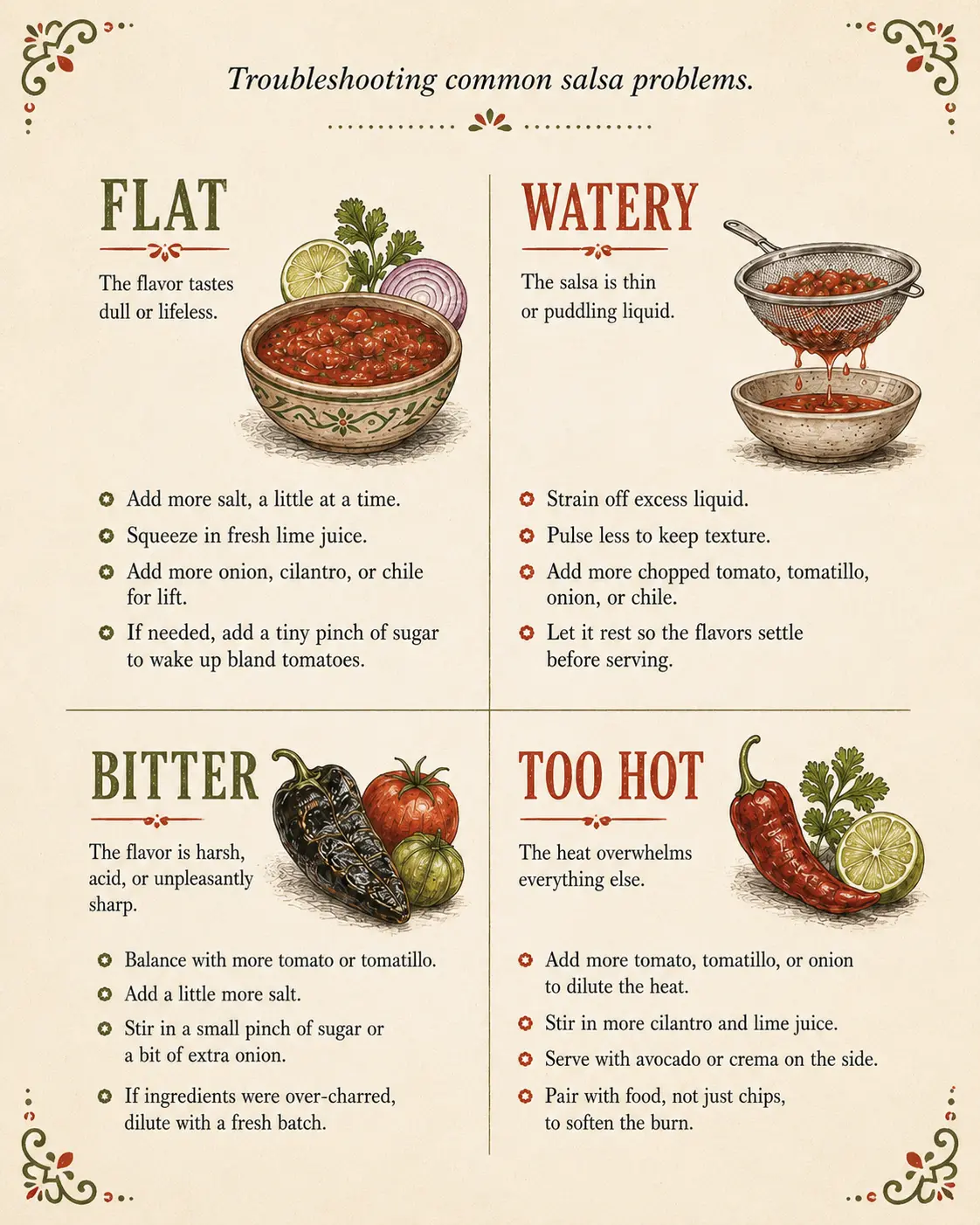
Salsa Triage
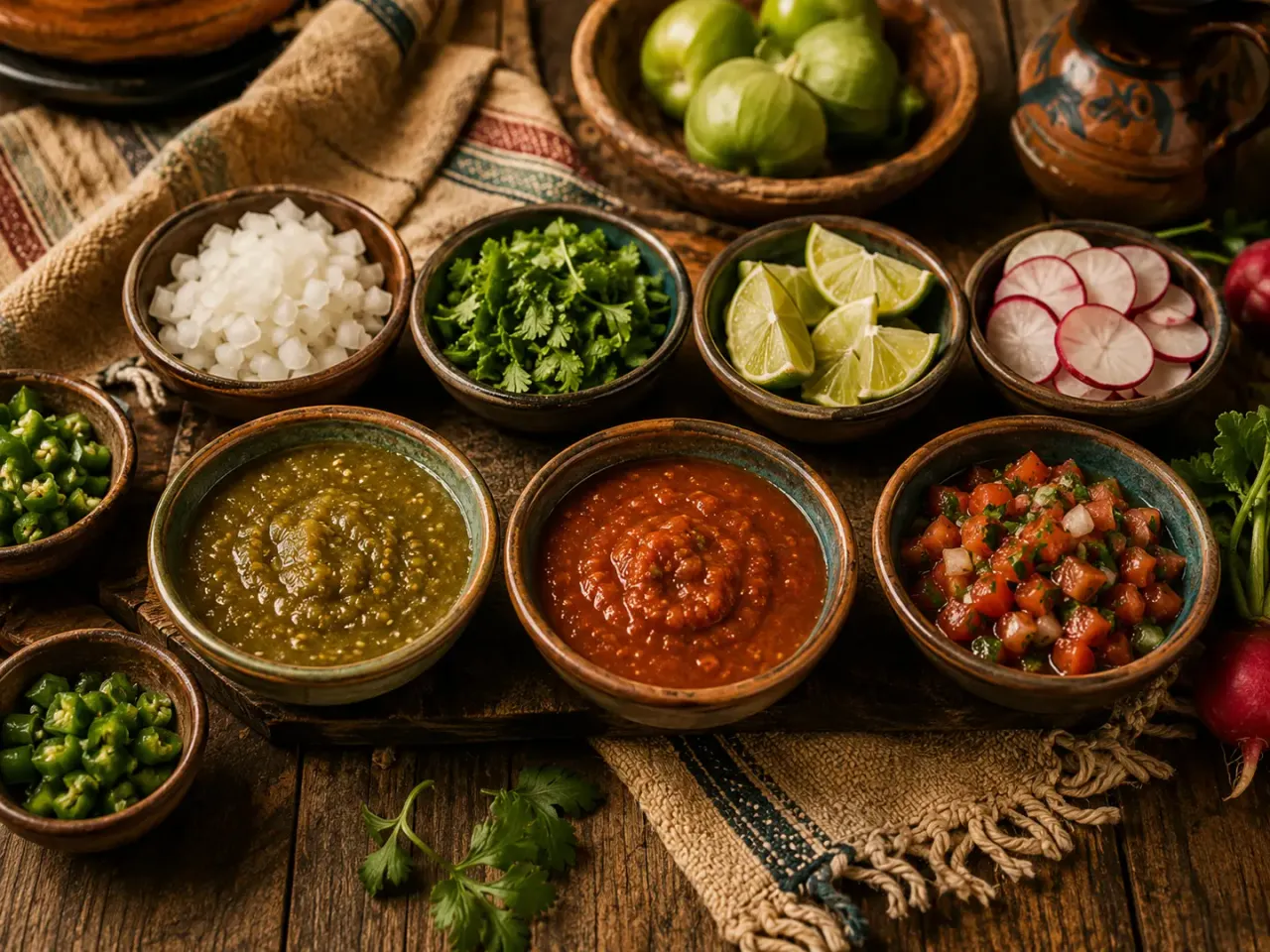
Flat salsa usually needs salt, acid, or a fresher garnish—not necessarily more chile. Watery salsa may need drained tomatoes, less blending liquid, or a quick fry and simmer. Bitter salsa often points to burned dried chiles, excessive char, old spices, or too much soaking liquid. Too-hot salsa can be diluted with more tomato or tomatillo, avocado, fruit, broth, or another batch without chile. Sugar is not a fire extinguisher.
For a better molcajete salsa, grind salt, garlic, onion, and chile first, then crush in roasted tomatoes or tomatillos. For a smoother cooked sauce, blend in modest batches and strain. The texture should match the dish: chunky for scooping, loose for dipping, concentrated for coating, and thick enough for a taco not to require flood insurance.
 Open full size ↗
Keep Tortillas Alive
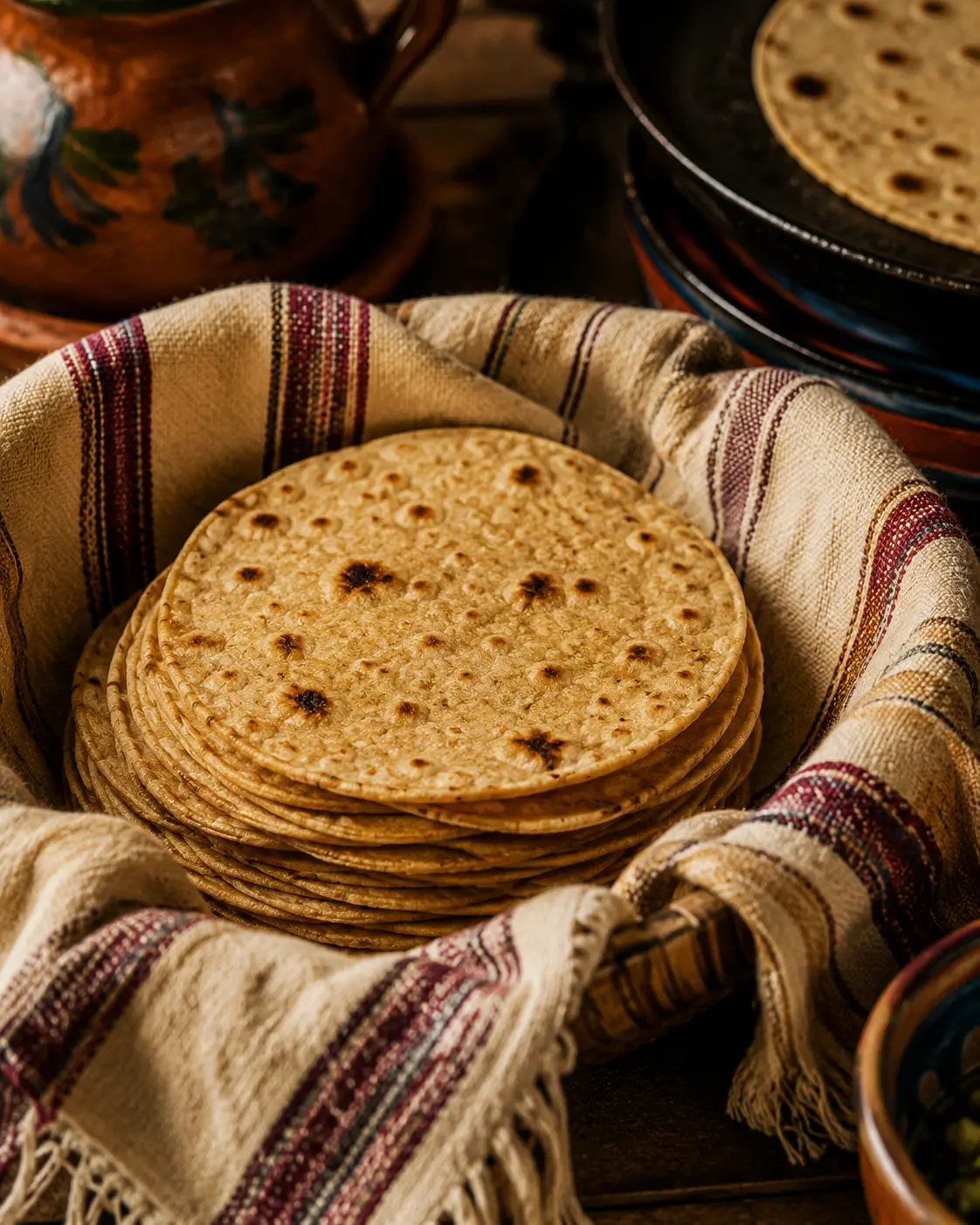
Heat tortillas until pliable and fragrant, then hold them in a clean towel or covered warmer. Bring them to the table in small batches rather than exposing the whole stack to dry air. Use two thin tortillas for wet or heavy fillings; one sturdy fresh tortilla may be enough for lighter tacos.
Store-bought tortillas improve dramatically with decisive heat. Toast or lightly char them on a comal. If they are too dry for tacos, turn them into tostadas or chilaquiles instead of asking them to perform a job they have emotionally left.
Plan Taco Night Like a Cook, Not a Caterer in a Panic
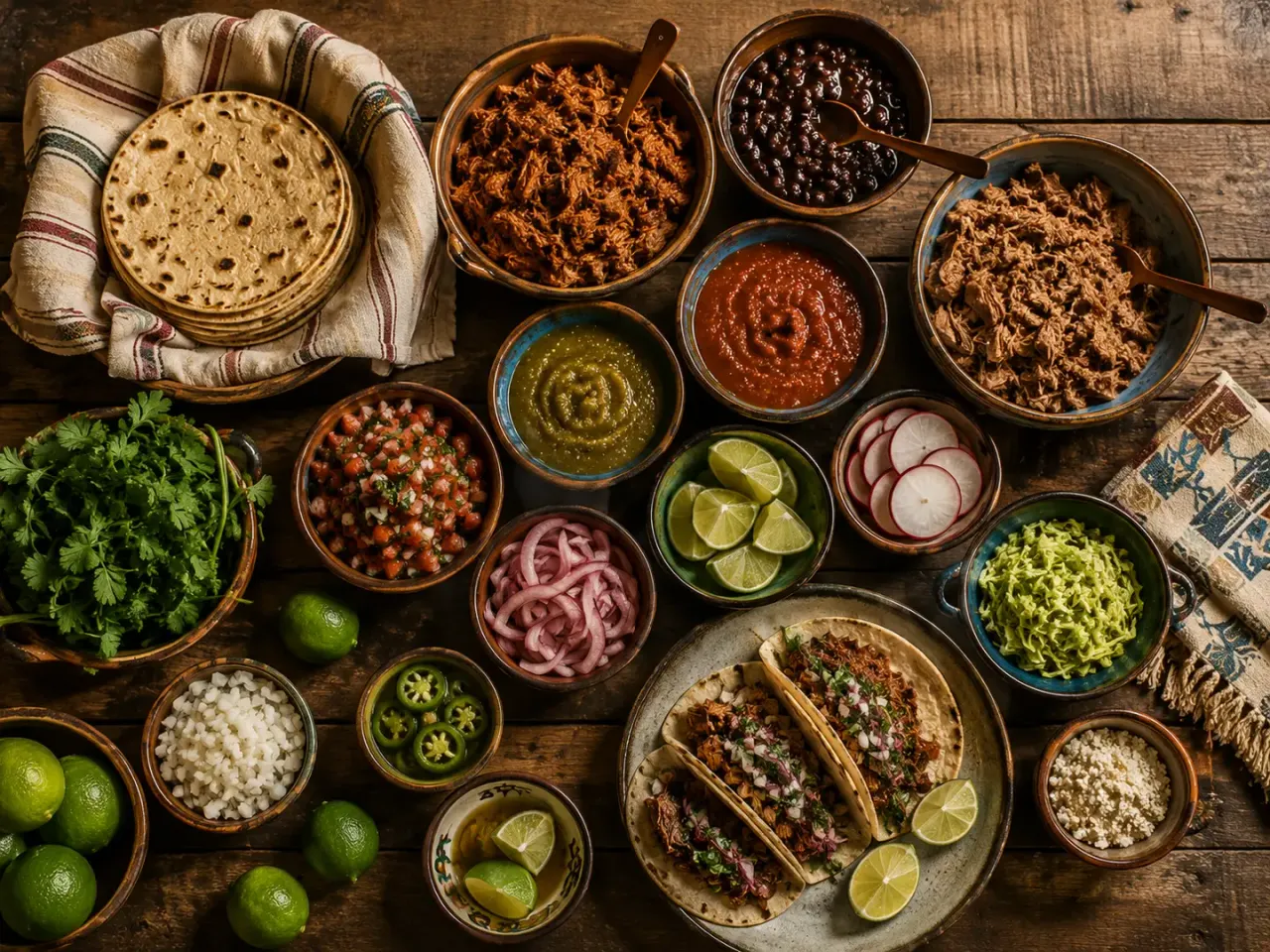
A useful starting point is three to four tacos per person, plus beans, salad, rice, or another side. Roughly one cup of filling makes about four modest tacos. For four people, two fillings are generous; for eight, three or four is plenty. More choices do not automatically create more joy. Sometimes they create nine half-empty bowls and a refrigerator puzzle.
Balance the table: one rich filling, one bright or vegetable-forward filling, one fresh salsa, one cooked salsa, something acidic, something crunchy, and plenty of warm tortillas. Keep hot food hot and replenish in small pans so it does not dry out while everyone debates which salsa is “actually hot.”
Let Moles, Beans, and Stews Help You
Many moles and stews improve after a rest because flavors redistribute and harsh edges soften. Make them a day ahead, cool them promptly, and reheat gently with broth or water as needed. Beans can also be cooked ahead and transformed: soupy beans one day, refried beans the next, enfrijoladas after that. This is not leftovers management. It is menu planning with better public relations.
Refrigerated cooked leftovers should generally be used within three to four days and reheated to 165°F. Cool large pots in shallow containers rather than leaving a five-gallon monument of pozole on the counter until bedtime.
Troubleshoot by Symptom
Cracking masa: add warm water a teaspoon at a time, knead, cover, and rest. Tortilla sticks to the plastic: the masa may be too wet, the liner wrinkled, or the press uncovered at the edges. Beans refuse to soften: they may be old, the water may be hard, or acidic ingredients may have gone in too early. Nopales stay slimy: cut and cook them with salt, then drain and rinse, or use a dry-skillet method; do not expect one universal technique to fit every dish. Mole becomes too thick: loosen with the appropriate broth and whisk slowly. Mole seems gritty: blend again and strain rather than pretending texture is a moral virtue.
Be Specific About “Authentic”
Authenticity is not a purity test; it is a relationship to place, people, method, and memory. A dish can be traditional, regional, family-specific, restaurant-style, Mexican American, or inspired—and still be worth eating. The honest move is to name what you changed.
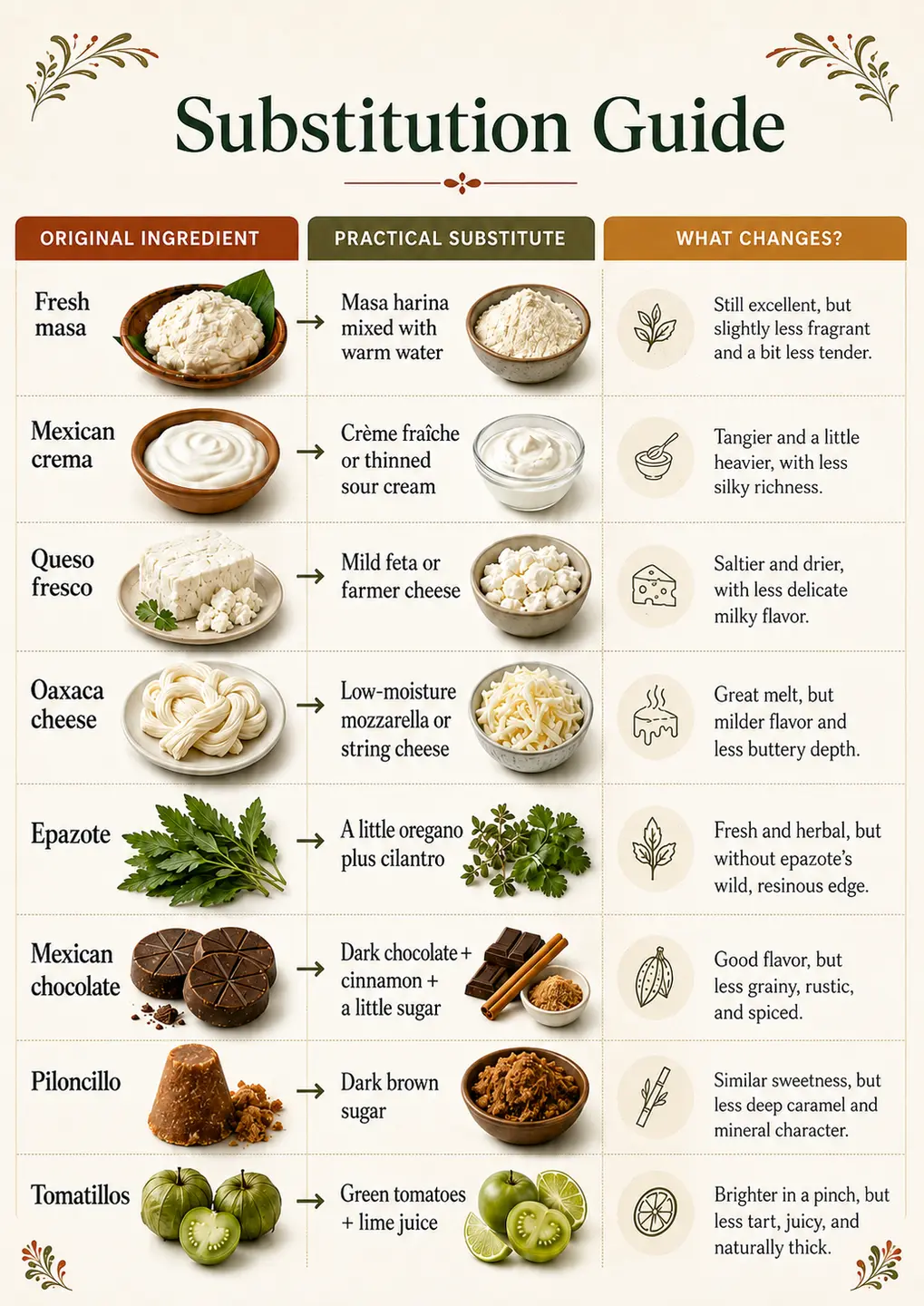
Substitute by function. Anaheim can stand in for a hard-to-find fresh chile when you need mild flesh and roastability, but it will not reproduce chile de agua’s exact heat and flavor. Spinach can replace quelites for texture and greenery, but say so. Respect grows from clarity, not costume jewelry.
 Open full size ↗
| Original ingredient | Practical substitute | What changes |
|---|---|---|
| Fresh masa | Masa harina mixed with warm water | Still excellent, but slightly less fragrant and a bit less tender. |
| Mexican crema | Crème fraîche or thinned sour cream | Tangier and a little heavier, with less silky richness. |
| Queso fresco | Mild feta or farmer cheese | Saltier and drier, with less delicate milky flavor. |
| Oaxaca cheese | Low-moisture mozzarella or string cheese | Great melt, but milder flavor and less buttery depth. |
| Epazote | A little oregano plus cilantro | Fresh and herbal, but without epazote’s wild, resinous edge. |
| Mexican chocolate | Dark chocolate, cinnamon, and a little sugar | Good flavor, but less grainy, rustic, and spiced. |
| Piloncillo | Dark brown sugar | Similar sweetness, but less deep caramel and mineral character. |
| Tomatillos | Green tomatoes and lime juice | Brighter in a pinch, but less tart, juicy, and naturally thick. |
Three Safety Notes Worth Ruining the Mood For
Ceviche: Lime changes fish proteins and texture, but it does not reliably eliminate parasites or harmful bacteria. FDA identifies ceviche as a raw-seafood preparation; previously frozen fish reduces parasite risk, but cooking remains the safest option. People at higher risk should avoid raw or undercooked seafood.
Fresh cheese: Buy refrigerated queso fresco–type cheese from a reputable source. Pasteurization reduces risk, but these high-moisture cheeses can still be contaminated after production. People who are pregnant, older, immunocompromised, or otherwise at higher risk should follow current CDC guidance and eat them only when heated to 165°F or steaming hot.
Seafood sourcing: “Wild,” “local,” and “hook-and-line” are not automatic guarantees. Sustainability depends on species, stock, place, gear, management, and bycatch. Check a current science-based guide such as Seafood Watch rather than relying on a romantic sentence from an old cookbook.
Sazón Is Developed, Not Downloaded
Sazón is repeated judgment. It grows when you cook the same pot of beans more than once, notice what changed, and adjust without drama. Take notes. Weigh ingredients when consistency matters. Taste before and after adding acid. Learn what properly toasted chile smells like. Feed people.
A visual key for the kitchen








THE EXPERT TIP: Do not chase complexity for its own sake. Mexican food can be extraordinarily elaborate, but it can also be a hot tortilla, a spoonful of beans, salsa, cheese, and a squeeze of lime. The difference between simple and careless is attention.
Sources & notes
Owner-supplied articles retain their controlling source copy. Any research references listed below were checked on September 16, 2026.
- Good Buddy Butter Club owner source: Expert Tips.docx