
Mexican cooking does not become Mexican because cumin happened nearby. Its accent comes from technique: charring, toasting, soaking, grinding, frying a puree, steaming masa, simmering beans, and knowing when a tortilla is ready to leave the comal.
You can cook excellent Mexican food without recreating a museum kitchen. A cast-iron skillet can stand in for a comal. A blender can do real work. But understanding what the older tools and methods do will keep the modern substitutions honest.
Asar: Flavor from Dry Heat
The Spanish verb asar covers roasting, toasting, searing, broiling, and charring. In Mexican kitchens it describes a family of dry-heat moves: blistering poblanos over flame, blackening tomatoes and tomatillos on a hot surface, toasting garlic in its skin, searing meat over coals, and cooking tortillas on a comal.
The goal is not simply “burnt.” You want concentrated sweetness, softened sharpness, smoky edges, and controlled bitterness. Rotate ingredients so the surface chars while the interior cooks appropriately. A tomato can tolerate black spots. A dried chile can go from fragrant to bitter in the time it takes to answer a text.
Toast, Soak, Blend, Strain
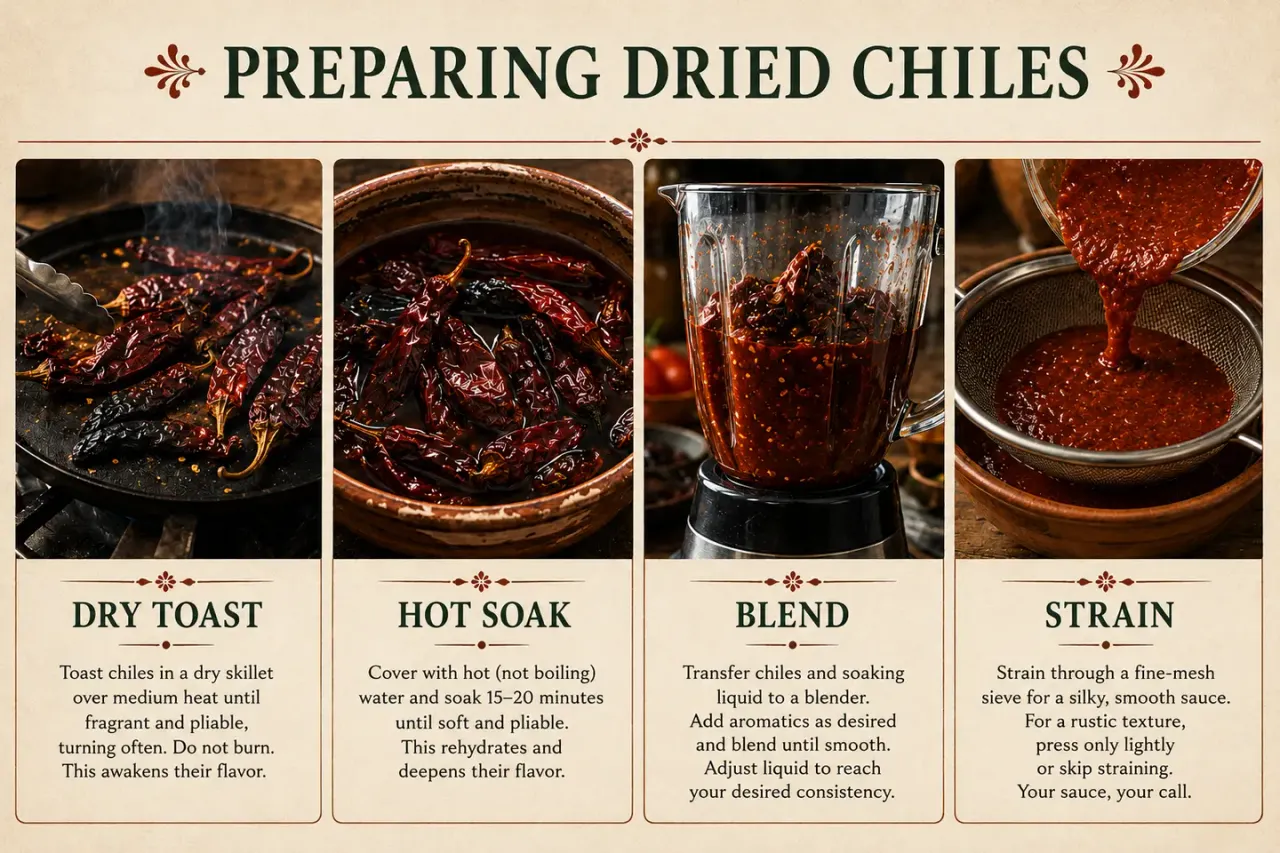
Dried chiles are not red confetti. They are fruit that has been preserved and concentrated. Stem them, open them, and remove as much placental tissue as needed for heat control. Toast briefly on a hot comal or skillet until fragrant and slightly pliable, then soak in hot water until soft.
Blend with only enough liquid to keep the blades moving. If the sauce depends on guajillo, pasilla, or another tough-skinned chile, push it through a fine-mesh strainer. The strainer is not fussy restaurant theater; it removes skins and grit so the sauce can taste deep without chewing back.
 Open full size ↗
Fry the Sauce
One of the most important moves in Mexican cooking is adding a puree to hot fat and frying it before the longer simmer. The mixture will hiss, sputter, darken, thicken, and lose its raw edge. This concentrates flavor and creates a seared character that a quiet simmer alone will not produce.
Use a wide, heavy pan, keep a lid nearby as a shield, and add the puree carefully. Stir until the sauce becomes visibly thicker and the fat begins to show at the edges. This is where salsa becomes sauce and where your shirt learns whether you planned ahead.
Grinding: Crush Versus Chop
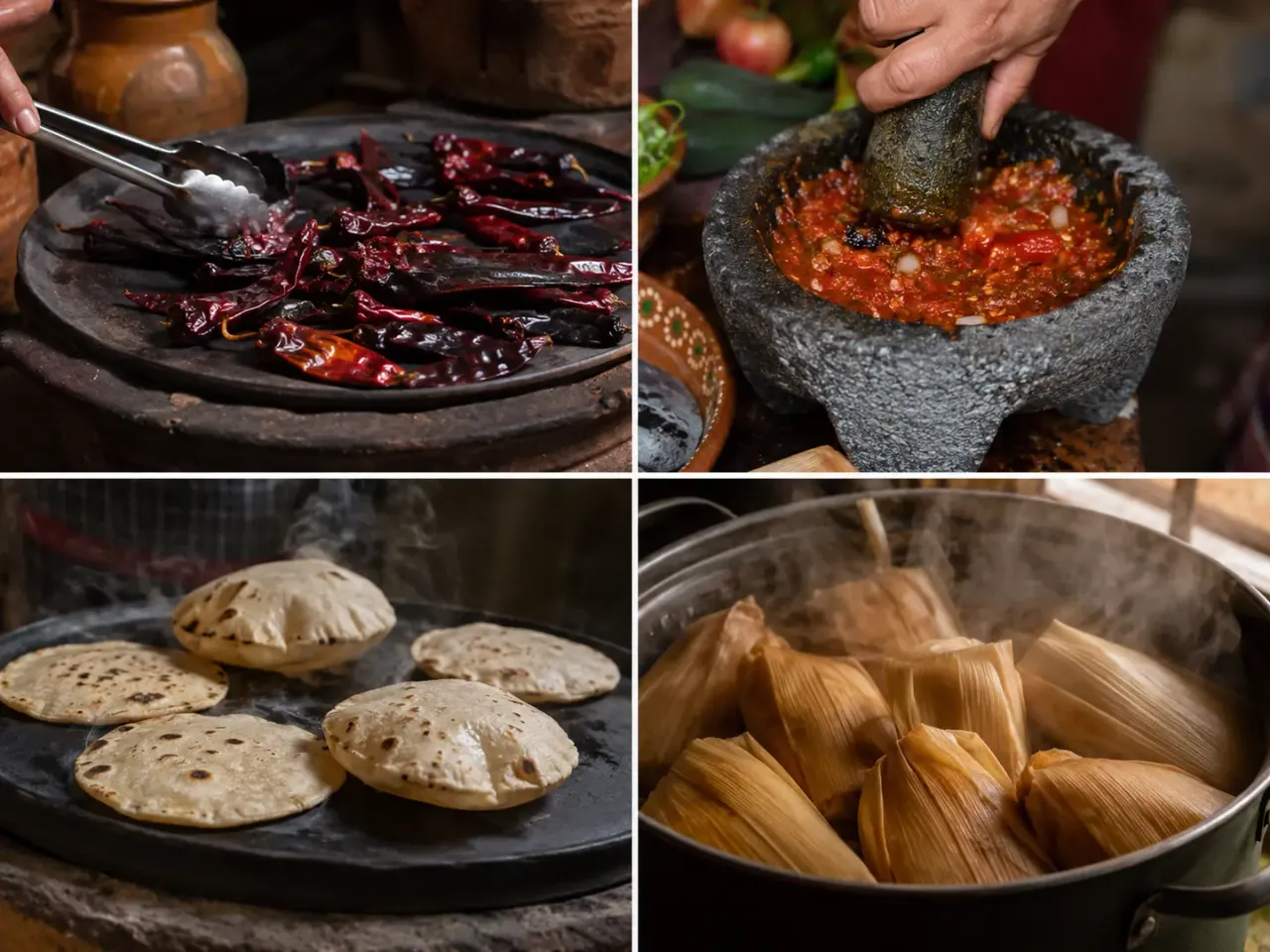
A metate crushes corn, chiles, seeds, and cacao across stone. A molcajete pounds and smears ingredients against volcanic rock. A blender chops at high speed. All three can produce delicious food, but they create different textures and release aroma differently.
For a molcajete salsa, grind hard ingredients first—salt, garlic, onion, dried spices, fresh chiles—then work in roasted tomatoes or tomatillos. The result should be cohesive but alive with texture. A blender is useful, but it is not a metate in business casual. When using one, blend in smaller batches and finish with a strainer when the recipe needs silk rather than rubble.
Masa, Pressing, and the Puff
Masa should feel moist, smooth, and cohesive. If the edge of a test ball cracks when pressed, knead in a little warm water and rest it. Line the tortilla press with two pieces of food-safe plastic cut from a freezer bag. Press gently at first; thicker tortillas are easier to transfer while you learn.
Cook on a fully preheated comal. The first side stays down only until the tortilla releases, often about 30 seconds. Flip, cook the second side longer, then flip back. A well-made tortilla often puffs as steam separates the layers. That puff is not the sole moral measure of a tortilla, but it is deeply satisfying kitchen theater.
Steam, Simmer, and Slow Down
Tamales, barbacoa, beans, broths, pozole, moles, and stews depend on moist heat and time. A gentle simmer extracts and tenderizes without beating the ingredients to pieces. Steaming cooks masa in a humid environment while the wrapper holds its shape and aroma. Pit cooking surrounds food with earth, heat, smoke, and steam; at home, a covered Dutch oven or steamer can reproduce the logic even when the backyard HOA has no sense of adventure.
The Equipment That Actually Earns Its Keep
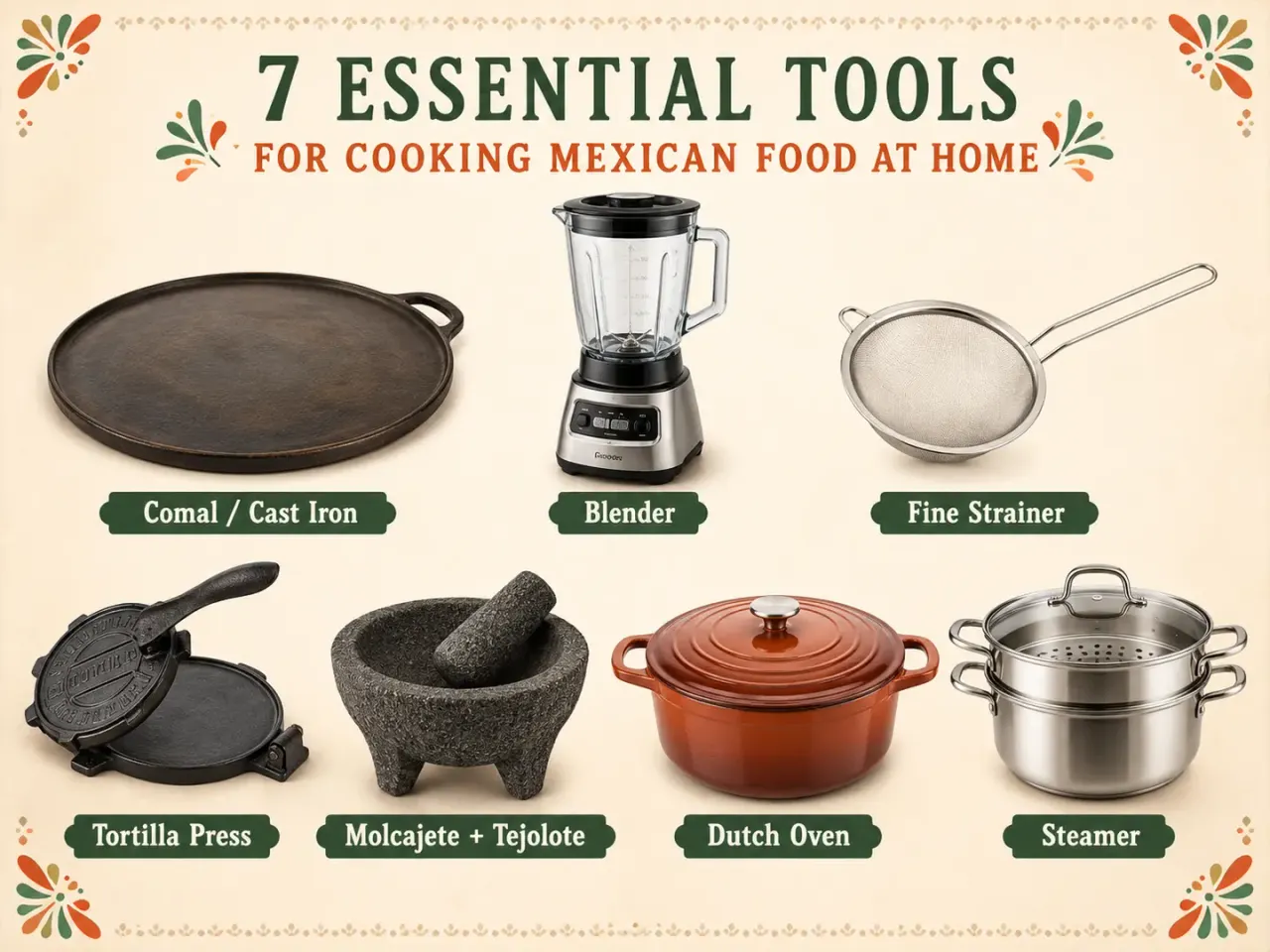
Start with a comal or cast-iron skillet, a reliable blender, a fine-mesh strainer, a heavy pot or Dutch oven, and good tongs. Add a tortilla press if you plan to make tortillas, tetelas, or other pressed masa foods. Add a steamer or tamalera if tamales will be regular guests. A molcajete is worthwhile when you love textured salsa and do not mind a little arm work.
A kitchen scale, instant-read thermometer, wooden spoon, ladle, slotted skimmer, and sheet pans are not culturally specific, but they solve culturally universal problems. Buy sturdy tools before decorative ones. The bowl with painted flowers can wait; the pan that heats evenly cannot.
 Open full size ↗
IMPORTANT SAFETY NOTE: Use only food-grade calcium hydroxide for nixtamalization. Ventilate when charring chiles, avoid touching your face after handling hot peppers, and remember that a towel-wrapped pot handle can still be hot enough to rewrite your afternoon.
Sources & notes
Owner-supplied articles retain their controlling source copy. Any research references listed below were checked on September 16, 2026.
- Good Buddy Butter Club owner source: Traditional Techniques.docx