
A tool earns cabinet space by solving a recurring cooking problem. Start with the core kit, add equipment when a technique keeps asking for it, and treat specialty pieces as working tools rather than authenticity props.
The Core Kit
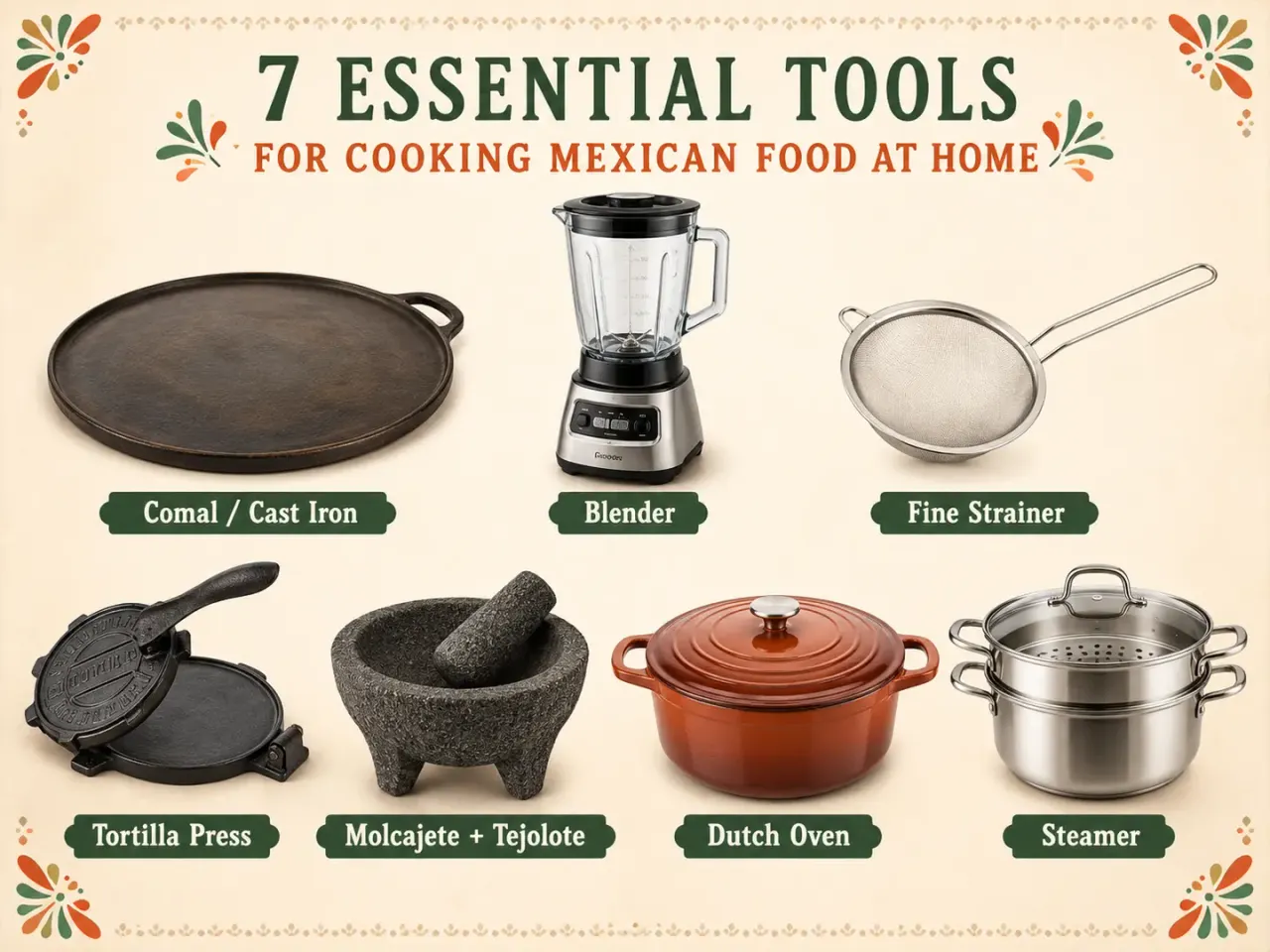
Start with a comal or broad cast-iron skillet, a reliable blender, a fine-mesh strainer, a heavy pot or Dutch oven, and good tongs. Add an instant-read thermometer as a safety tool. Those pieces cover more useful ground than a cabinet full of decorative gadgets.
 Open full size ↗
Flat Heat: Comal or Skillet
A comal gives tortillas, tomatoes, tomatillos, chiles, and garlic a broad dry-heated surface. A stable skillet or griddle can serve the same basic function when its material, shape, and care fit the job. Follow the maker’s care guidance rather than assuming every comal behaves like bare cast iron.
Texture: Blender, Strainer, and Molcajete
A blender chops at high speed. A fine-mesh strainer removes tough skins and grit. A molcajete crushes and smears ingredients against stone, producing a different texture. If you buy one for food, look for depth, stability, and a useful grinding surface—not a shallow decorative bowl.
Masa: Tortilla Press
Buy a press when tortillas, tetelas, or other pressed-masa foods recur in your cooking. There is no universal substitute that fits every recipe; use the hand method authorized by the recipe you selected.
Steam and Slow Cooking
A tamalera or steamer supports repeat tamale work. A compatible lidded pot with an elevated rack or basket may fill the steaming role when the recipe and equipment instructions permit it. A heavy pot earns its place through beans, broths, moles, and stews.
Clay Is a Safety Decision
Use pottery from a reliable source that identifies it as foodware. Decorative, damaged, antique, or unverifiable glazed pottery should not be used for food. Appearance alone cannot establish safety, and even a ‘lead free’ label is not a substitute for trustworthy production and testing.
Care by Material
For bare cast iron, wash, dry completely, and maintain a very thin oil layer according to the maker. For stone, follow the artisan’s preparation and cleaning guidance. For electric appliances, use the model-specific manual. Wash food-contact tools after use and dry them appropriately.
Buy in This Order
Buy the core kit first. Add tools demanded by techniques you repeat. Add genuine specialty equipment last. The order keeps money tied to cooking you actually do.
THE CABINET-SPACE RULE: Buy the tool when a technique keeps asking for it.
Sources & notes
Owner-supplied articles retain their controlling source copy. Any research references listed below were checked on September 16, 2026.
- U.S. FDA: Questions and Answers on Lead-Glazed Traditional Pottery (opens in a new tab)
- Museo Nacional de Antropología / INAH: Molcajete (opens in a new tab)
- Smithsonian: Tortilla press (opens in a new tab)
- Smithsonian: Comal (opens in a new tab)
- UNESCO: Traditional Mexican cuisine (opens in a new tab)
- Lodge: Bare cast-iron care (manufacturer-specific) (opens in a new tab)