

Scope: General food education only; no individualized medical advice or invented recipe nutrition values.
Mexican cooking does not need a miracle ingredient. Its everyday strength is a flexible pattern: vegetables and fruit, grains or tubers, beans and other legumes, plus thoughtful amounts of animal foods and fats.
This is general food education, not individualized nutrition or medical advice. If a medical condition changes what you should eat, use guidance from a qualified clinician who knows your needs.
Think in Meals, Not Superfoods
One chile, bean, or seed does not make an entire menu nourishing by itself. The more useful view is the broader pattern: variety across meals, regular plant foods, water, and preparation that supports the ingredients instead of burying them.
That approach also leaves room for celebration. Carnitas, sweet bread, flan, and cheese do not need to be sentenced in a courtroom. They simply belong inside a larger pattern rather than standing in for the whole cuisine.
A Five-Part Framework
Mexico’s national dietary guidance organizes food into five broad groups: vegetables and fruit; whole grains or tubers; legumes; animal-source foods; and healthy oils and fats. You do not need all five in equal piles at every sitting. Use the framework to notice what the meal already has and what would make it more complete.
Let Plants Do More of the Work
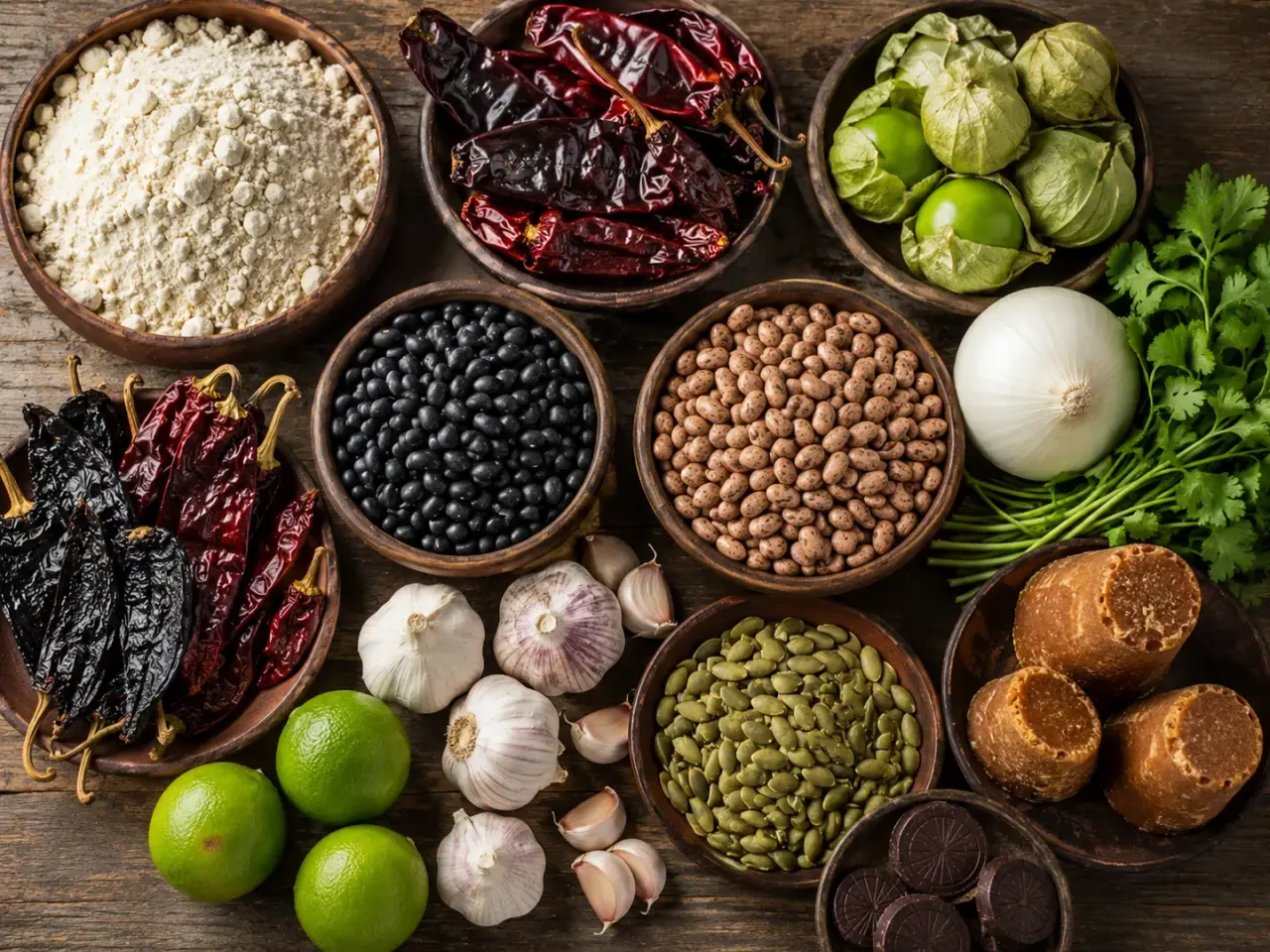
Build the meal around vegetables, legumes, and grains or tubers. Meat can bring flavor without automatically becoming the whole plot. Add squash or greens to a guisado, beans beside corn, or a bright cabbage and radish salad next to a rich filling.
Preparation Changes the Balance
Practical changes matter more than a label. Add vegetables or legumes to a stew, use meat as a supporting ingredient, choose plain water more often than sweetened drinks, and let minimally processed foods take more of the table.
These are patterns, not recipe nutrition calculations. The site does not invent calories, sodium, or other nutrient values for a recipe that has not been formally analyzed.
Portions Without a Courtroom Drama
Start modestly, eat with attention, and take more if you are still hungry. A U.S. Nutrition Facts serving size is a standardized comparison amount based on typical consumption; it is not a personal prescription for how much anyone must eat.
Variety Is the Useful Benefit
Rotate among vegetables, fruit, legumes, grains or tubers, and different preparations. Legumes contribute fiber and protein; planning around them can also build economical, flexible meals and give purposeful leftovers somewhere useful to go.
What Benefits Means Here
Benefits live in the pattern: variety, balance, practicality, enjoyment, and a meal that leaves room for everyday nourishment and celebration. No capes. No cure-all claims, detox promises, or single ingredients asked to do a whole menu’s work.
THE PRACTICAL RULE: Build the pattern over time. One meal does not need to carry the nutritional reputation of an entire cuisine.
Sources & notes
Owner-supplied articles retain their controlling source copy. Any research references listed below were checked on September 16, 2026.