
Mexico is not one cuisine with a few local specials. It is many cuisines sharing ingredients, histories, arguments, and a national talent for making dinner out of geography.
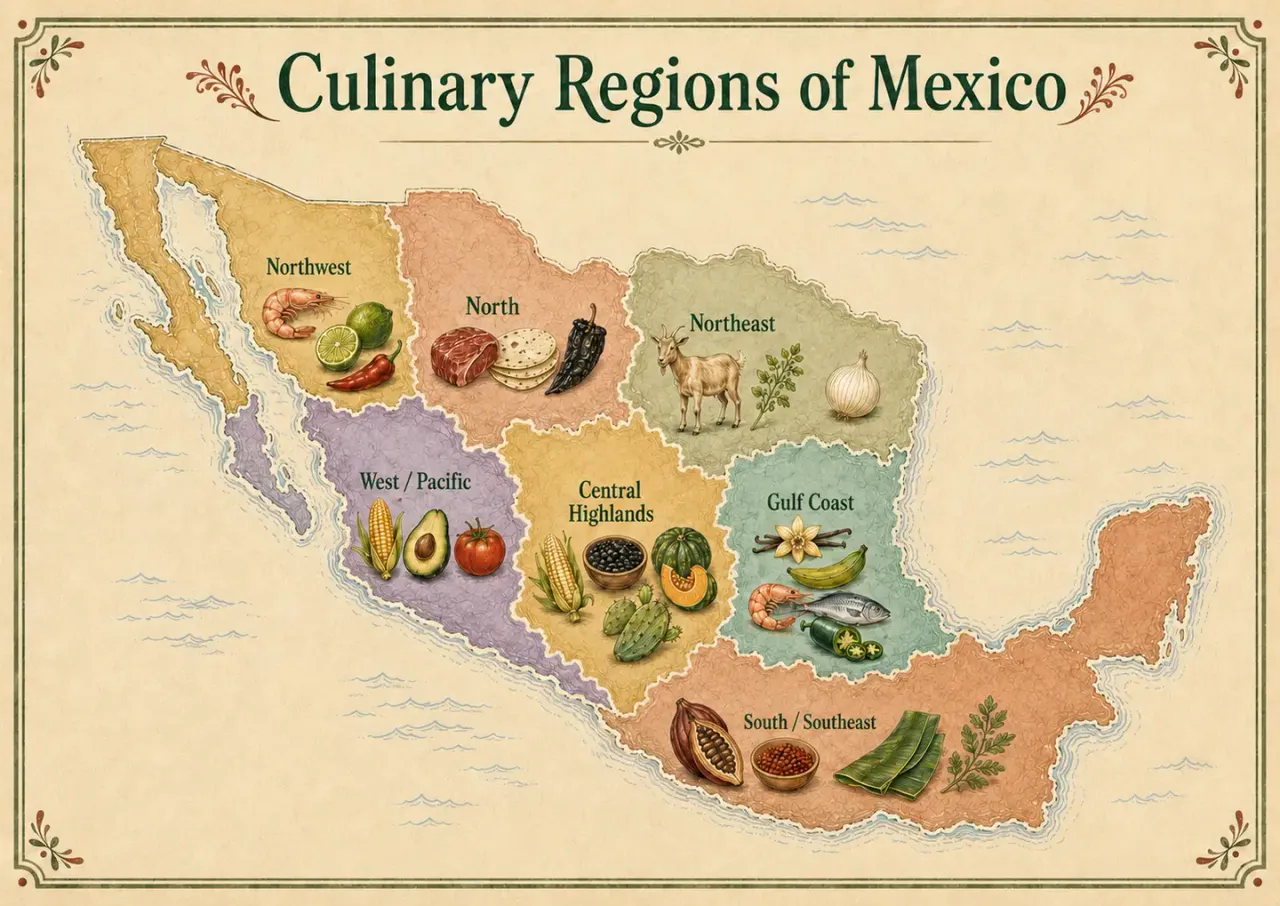
There is no single official culinary map, and every border gets fuzzy when cooks, families, ingredients, and workers move. The seven regions below are a practical learning tool—not a customs checkpoint. Use them to ask better questions: Where is this dish from? What grows there? What fuel, climate, migration, and market shaped it?
The North: Flour, Beef, Fire, and Wide Horizons
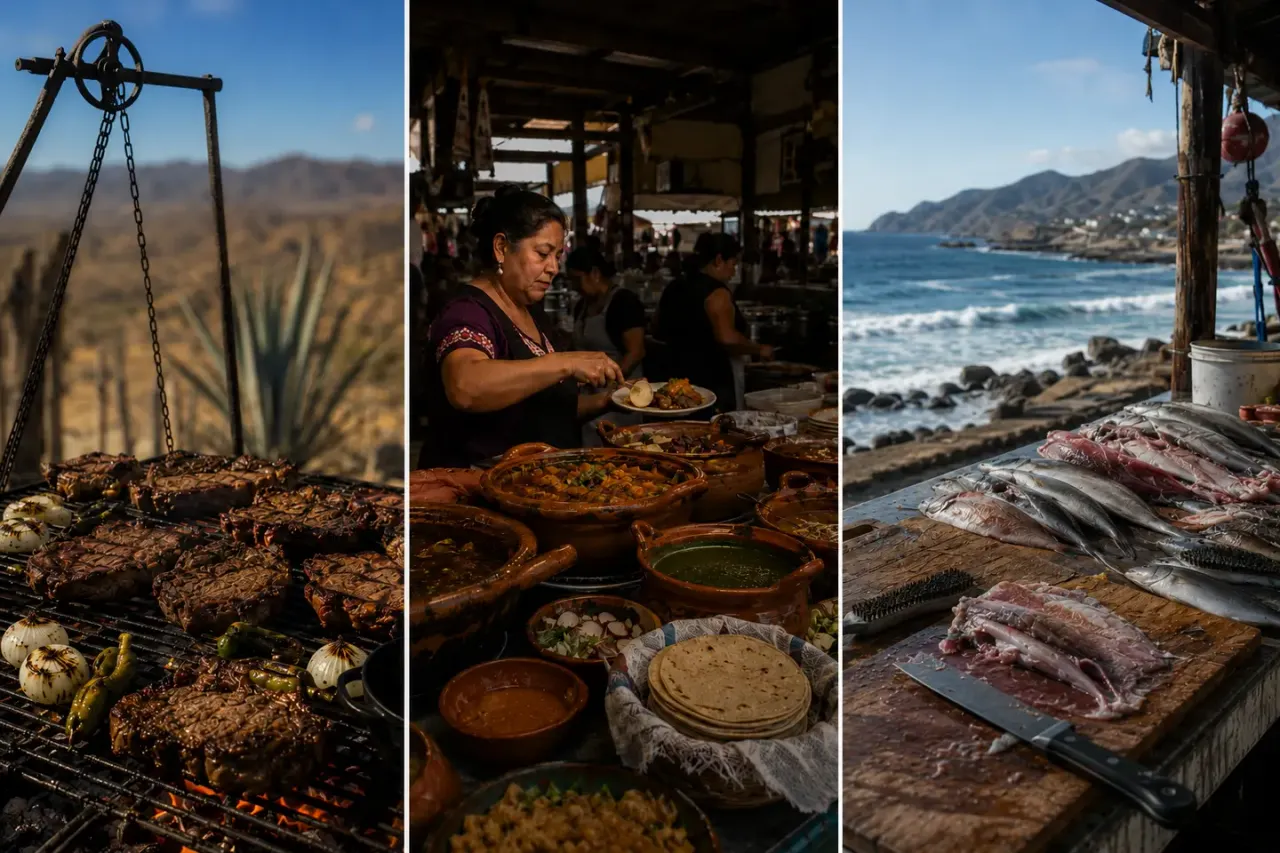
Across Sonora, Chihuahua, Coahuila, Nuevo León, and neighboring states, arid land, ranching, wheat cultivation, and border trade helped shape a direct, fire-driven cuisine. Expect flour tortillas, grilled beef, carne asada, dried beef and machaca, cabrito, red-chile braises, and sturdy beans. Mesquite and hot coals do a lot of the talking.
Northern food is often described as simple, but simple does not mean careless. When a meal depends on a tortilla, a steak, a chile, and a fire, every weak link becomes public information.
 Open full size ↗
Baja California: The Peninsula Looks to the Sea
Baja’s long coast and Mediterranean pockets produce a cuisine of fish tacos, clams, oysters, lobster, ceviche, grilled seafood, olive oil, wine, citrus, and produce that often needs less intervention than restraint. The peninsula also carries a powerful migration story: Chinese communities in Mexicali helped create a border cuisine where wok cookery, soy, seafood, wheat, and northern Mexican traditions meet without asking permission.
Central Mexico and the Bajío: Markets, Moles, Barbacoa, and City Appetite
Mexico City, Puebla, Tlaxcala, Hidalgo, Guanajuato, Querétaro, Morelos, and Michoacán form a densely layered center where pre-Hispanic cities, colonial institutions, market economies, pilgrimage routes, and modern urban life overlap. Here you find barbacoa and pulque, carnitas, moles and pipianes, tamales, chiles rellenos, sweets, breads, soups, and one of the world’s great street-food systems.
Puebla is especially important for the meeting of Indigenous ingredients with convent, Spanish, Arab-Iberian, and later immigrant influences. Mexico City is less a single regional cuisine than a permanent convention of everybody else’s food—with better snacks.
The West and Central Pacific: Carnitas, Birria, Tequila, and Seafood
Jalisco, Nayarit, Colima, Sinaloa, and parts of Michoacán are tied together less by one flavor than by confidence. This is the territory of birria, pozole, tortas ahogadas, carnitas, tequila, aguachile, shrimp, pescado zarandeado, coconuts, mangoes, and chile-rich coastal cooking. Jalisco projects an outsized national image—mariachi, tequila, birria—but neighboring states are not backup singers. Sinaloan seafood and Nayarit’s fire-grilled fish have their own swagger.
Oaxaca and the South Pacific: Corn, Chiles, Smoke, and Indigenous Continuity
Oaxaca is routinely reduced to “seven moles and mezcal,” which is like describing New England as clam chowder plus weather. The state’s rugged terrain and many Indigenous nations support extraordinary variation in maize, dried chiles, herbs, beans, squashes, tamales, breads, cheeses, fermented drinks, coastal seafood, and community traditions.
Look for tlayudas, memelas, tetelas, mole negro, coloradito, amarillo, chichilo, quesillo, hoja santa, avocado leaves, chile de agua, chilhuacle chiles, chocolate, and mezcal. In neighboring Guerrero and Chiapas, the food shifts again—toward pozoles, coastal dishes, Indigenous highland cooking, tropical produce, and distinct local moles and tamales.
The Gulf: Seafood, Tomatoes, Herbs, Coffee, and Caribbean Currents
Veracruz and Tabasco rise from hot coastal waters into coffee-growing mountains. Seafood is central: snapper, crab, shrimp, oysters, octopus, and river fish. Tomato, olives, capers, pickled chiles, herbs, plantains, cacao, vanilla, and rice reveal Spanish, Afro-Caribbean, Indigenous, and tropical histories.
Pescado a la veracruzana may be the region’s best-known ambassador, but the broader grammar matters more: bright acidity, aromatic herbs, seafood cooked with a light hand, and sauces that taste coastal without having to wear a little sailor hat.
The Yucatán Peninsula: Achiote, Sour Orange, Habanero, and the Pib
Yucatecan cooking is strongly Maya and often tastes surprisingly distant from the red-chile sauces of central Mexico. Achiote-based recados, sour orange, habanero, allspice, oregano, pumpkin seeds, turkey, pork, banana leaves, and pit cooking define much of its flavor.
Cochinita pibil, relleno negro, papadzules, sikil p’ak, salbutes, panuchos, sopa de lima, and pescado tikin xic show the region’s balance of smoke, acid, spice, and earthiness. Habanero is important, but the region is not a heat contest. The chile’s floral flavor matters as much as its threat level.
Why the Map Keeps Changing
Migration is not a footnote to regional cuisine; it is one of its engines. Lebanese techniques helped shape tacos árabes and al pastor in central Mexico. Chinese-Mexican cooking became part of Baja’s identity. Oaxacan food became central to Los Angeles. Mexican American, Tex-Mex, and Cal-Mex cuisines developed north of the border as legitimate regional systems, not failed copies of an imagined national original.
 Open full size ↗
| Lens | Signals to notice |
|---|---|
| North | Wheat tortillas, beef, dried meat, beans, mesquite, and direct fire |
| Baja California | Seafood, citrus, wine-country produce, olive oil, and border migration |
| Central Mexico and the Bajío | Markets, street food, barbacoa, moles, pipianes, breads, and sweets |
| West and Central Pacific | Carnitas, birria, agave spirits, seafood, and chile-forward sauces |
| Gulf Coast | Seafood, tropical produce, herbs, rice, and Afro-Caribbean exchange |
| Oaxaca | Maize, moles, tlayudas, mezcal, Indigenous continuity, and varied microclimates |
| Yucatán and the Southeast | Achiote, sour orange, habanero, recados, pit-cooking logic, and Maya continuities |
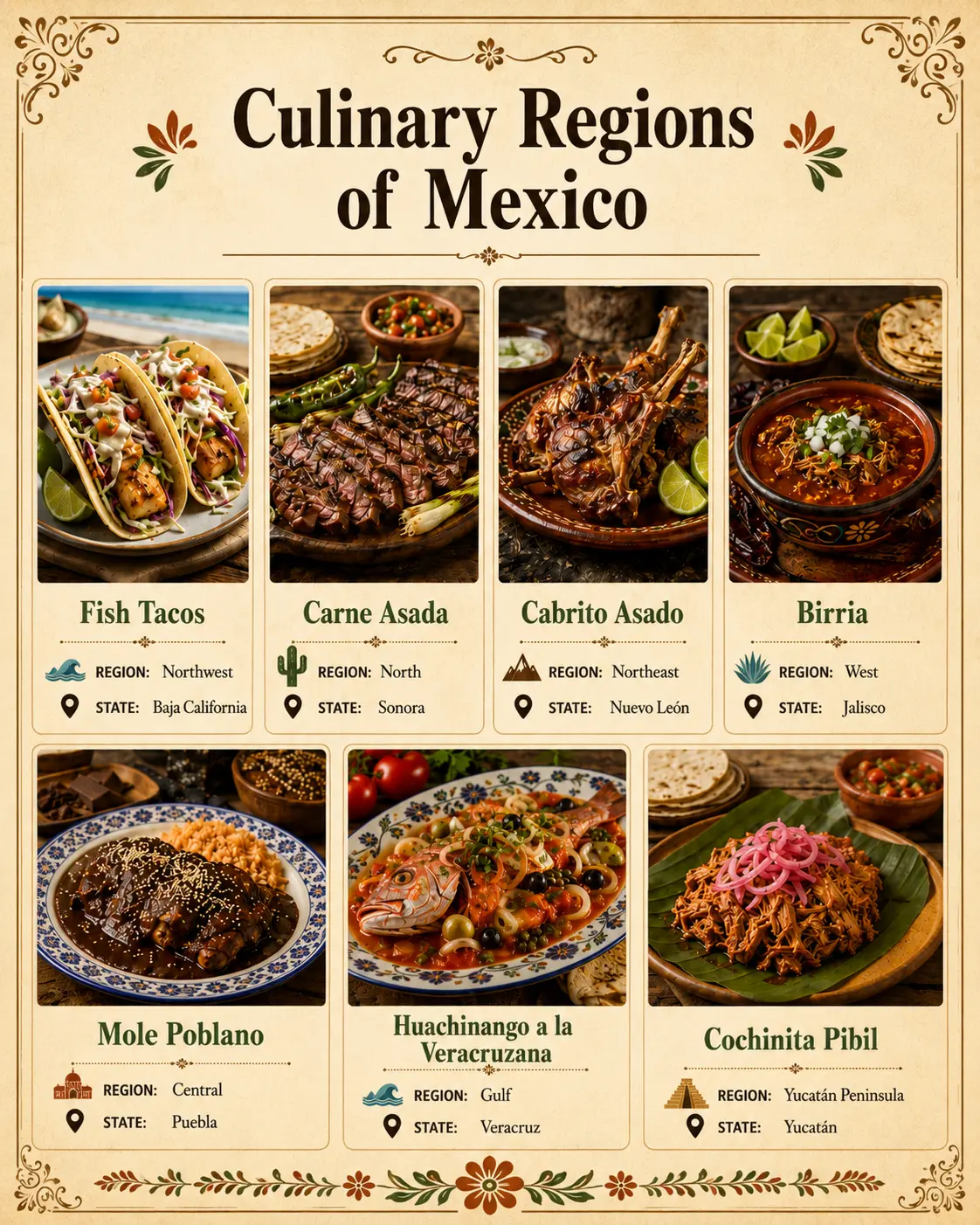
| Dish | Region label | State label |
|---|---|---|
| Fish tacos | Northwest | Baja California |
| Carne asada | North | Sonora |
| Cabrito asado | Northeast | Nuevo León |
| Birria | West | Jalisco |
| Mole poblano | Central | Puebla |
| Huachinango a la Veracruzana | Gulf | Veracruz |
| Cochinita pibil | Yucatán Peninsula | Yucatán |
USE THE MAP THIS WAY: Instead of asking whether a dish is “authentic Mexican,” ask what regional logic it follows: corn or wheat, coast or highland, pit or griddle, fresh chile or dried, Indigenous continuity or immigrant adaptation. The answer will teach you more—and start fewer pointless fights on the internet.
Sources & notes
Owner-supplied articles retain their controlling source copy. Any research references listed below were checked on September 16, 2026.
- Good Buddy Butter Club owner source: Regional Styles.docx