01
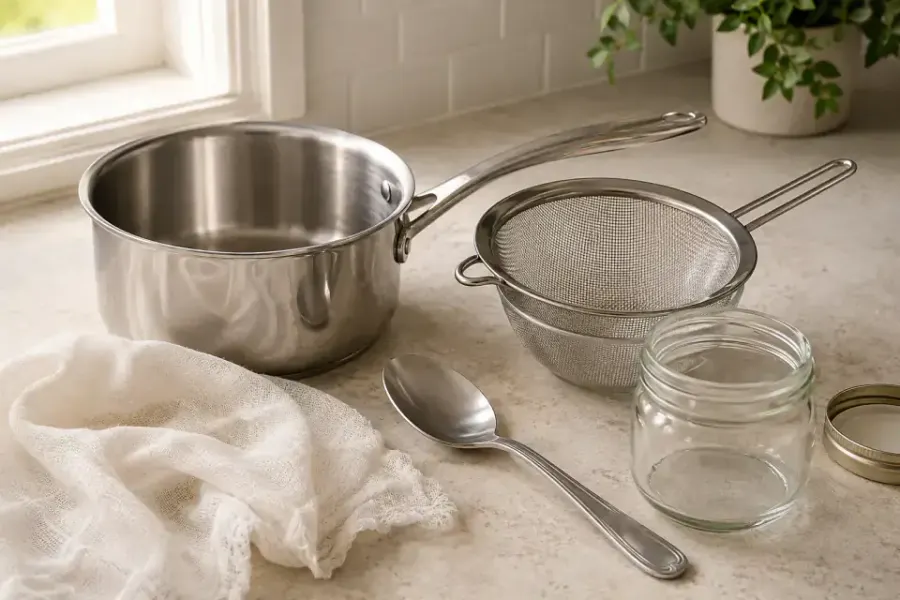
Choose the Butter:
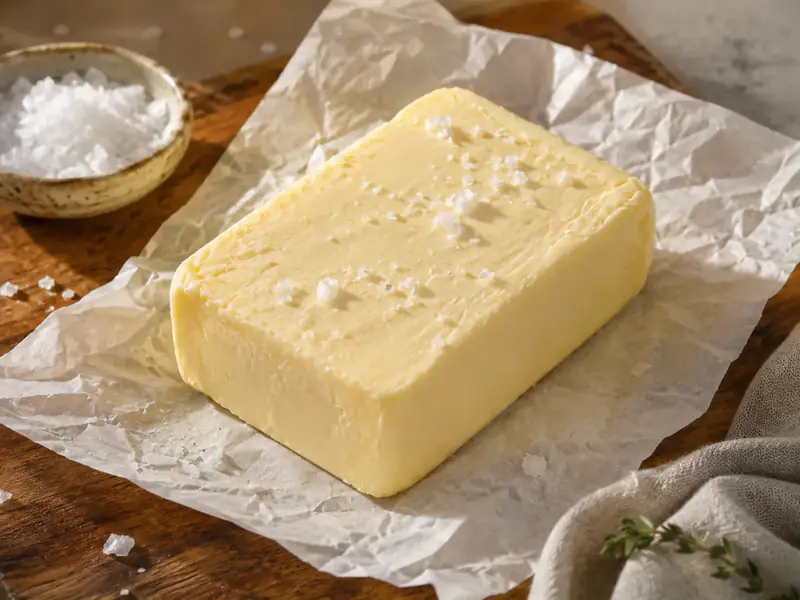
Start with high-quality unsalted butter, preferably cultured butter for a fuller flavor.

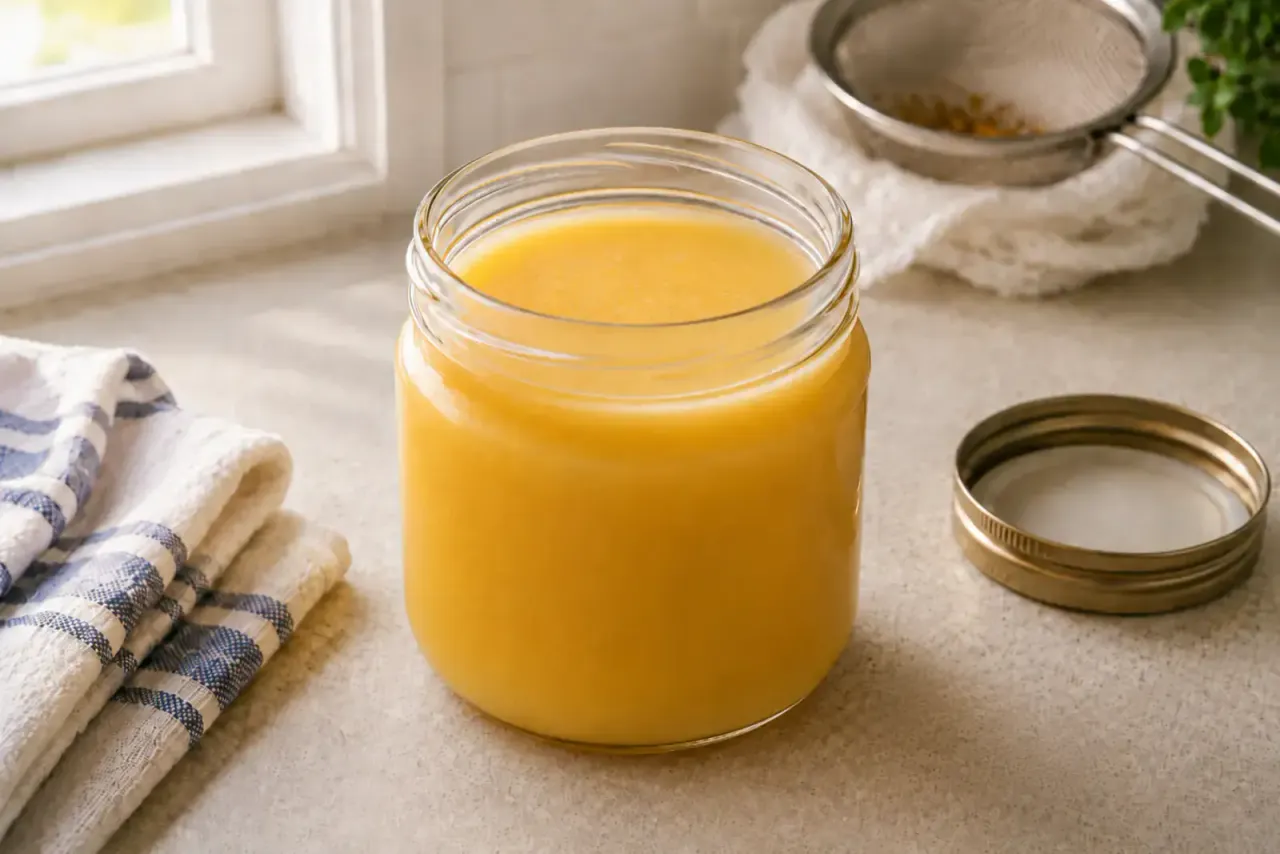
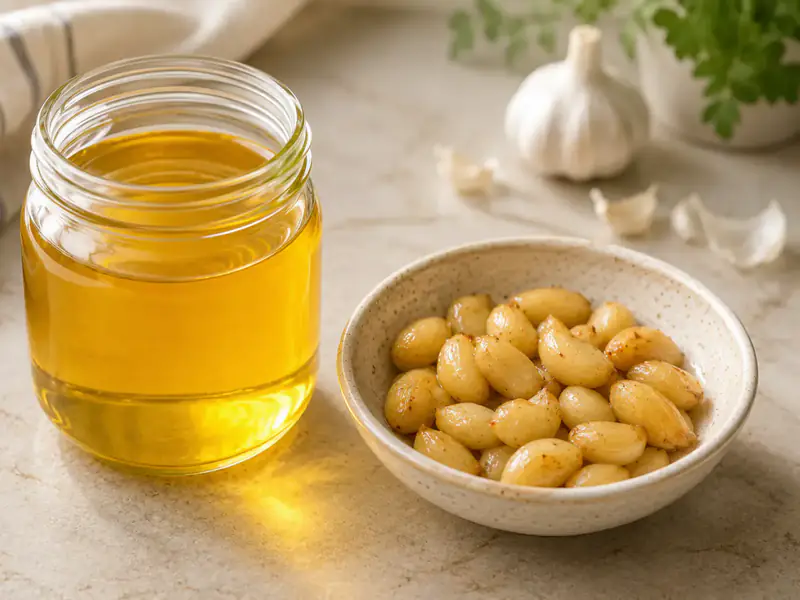
Slow simmering turns butter into a clear golden cooking fat as its milk solids toast to light brown. Watch the pan near the end for the nutty aroma and rich color that distinguish traditional ghee.
Ghee and clarified butter begin in the same saucepan, but they should not leave it at the same time. For ghee, the milk solids stay in the pan long enough to toast gently and give the finished butterfat its deeper color and nutty flavor. The last few minutes are where everything happens, so watch the bottom of the pan instead of relying only on the clock. Pull it from the heat when the solids are light brown—they will continue darkening briefly from the heat of the pan.
Start with high-quality unsalted butter, preferably cultured butter for a fuller flavor.
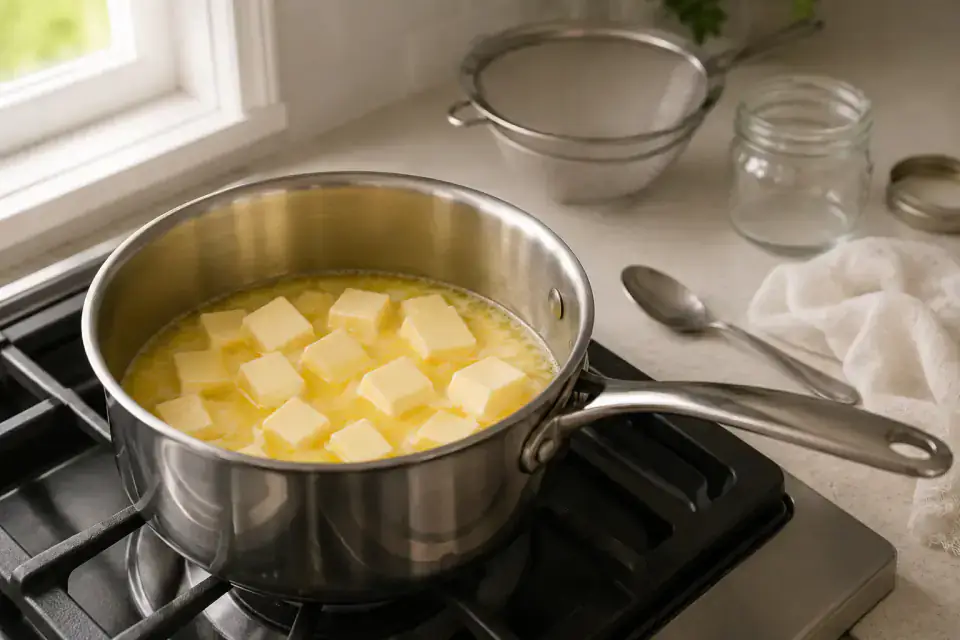
Melt the butter in a heavy saucepan without scorching the milk solids.
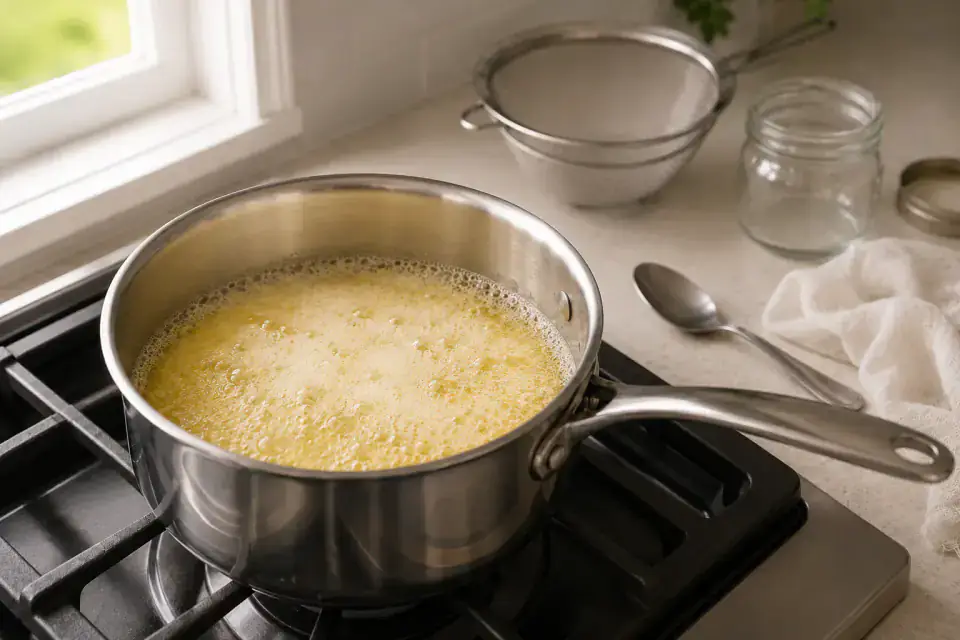
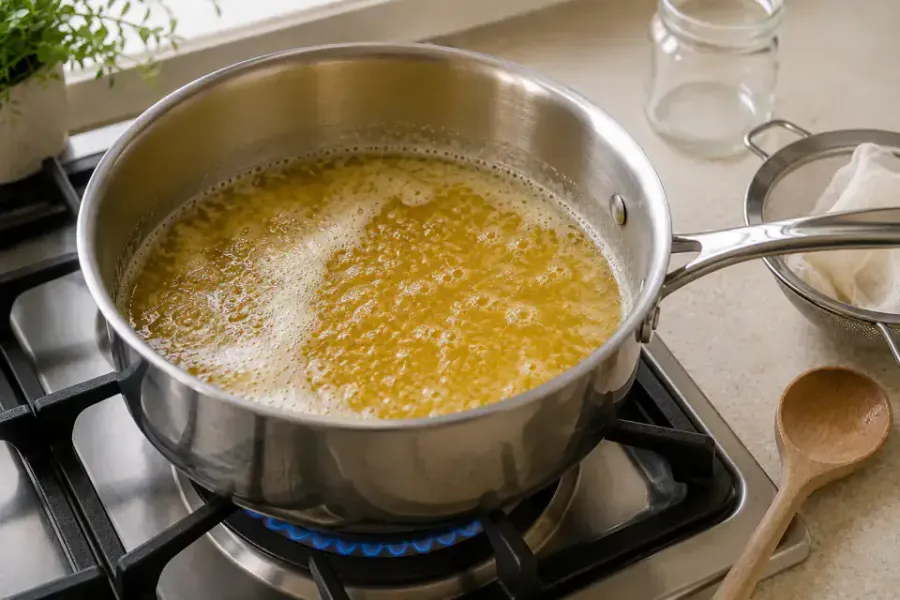
Maintain a gentle simmer while the butter foams and bubbles.
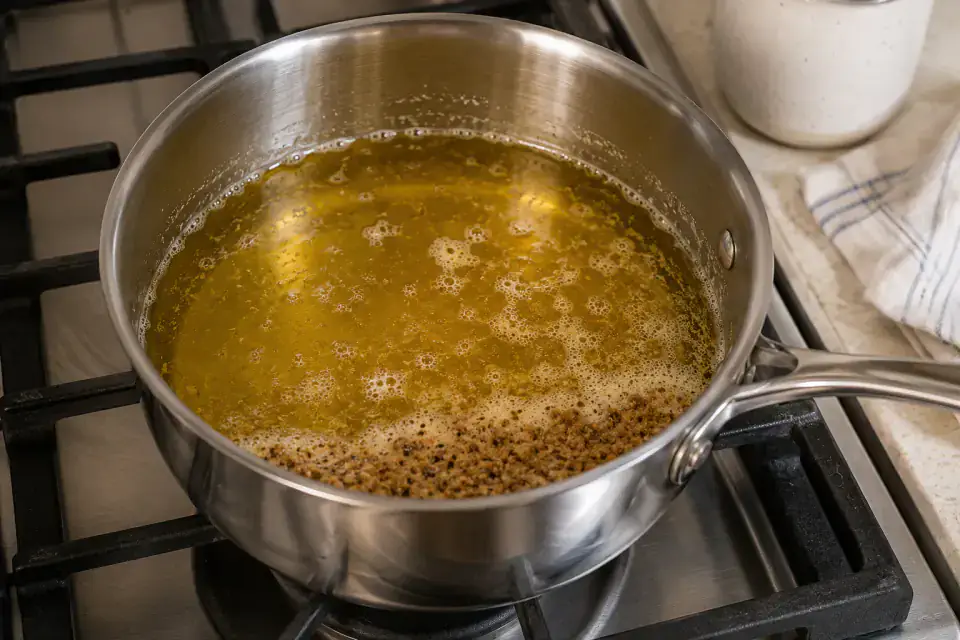
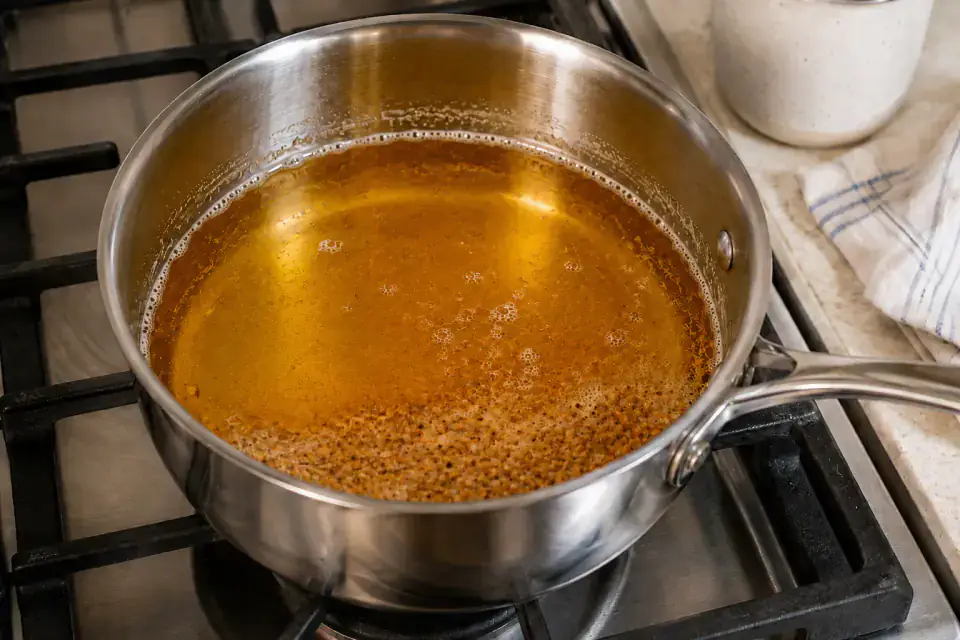
Continue cooking until the fat turns clear and golden and the solids become light brown.
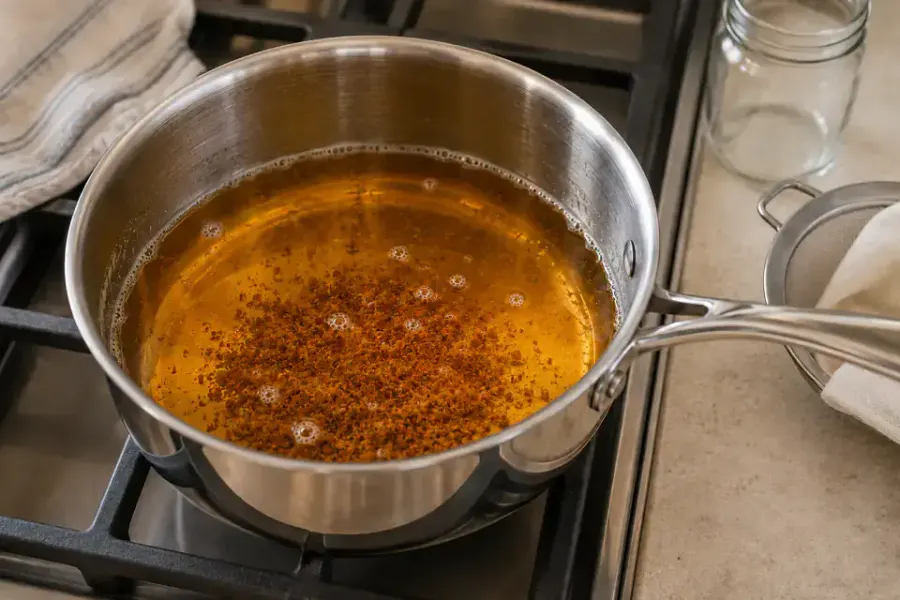
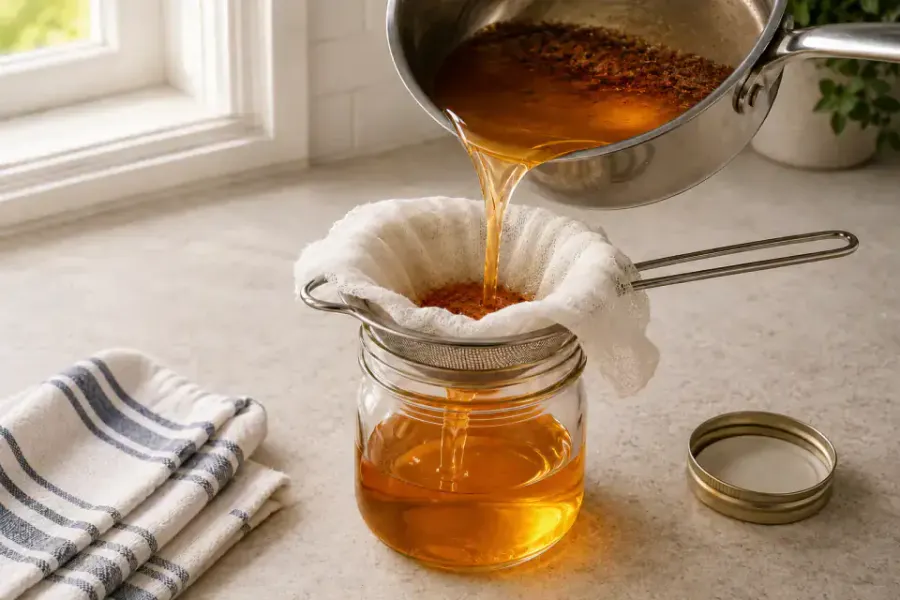
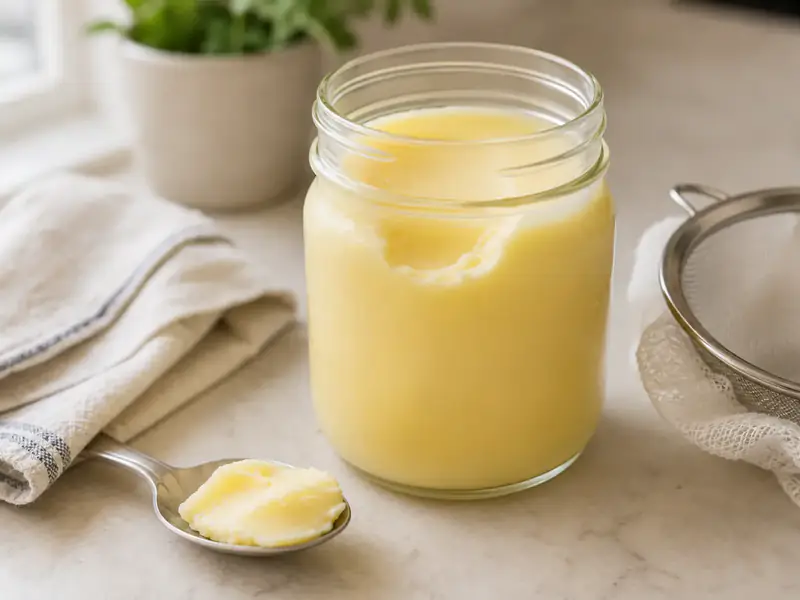
Filter the hot butterfat into a completely clean, dry jar.
Let the ghee cool uncovered before sealing the container.
Slow simmering turns butter into a clear golden cooking fat as its milk solids toast to light brown. Watch the pan near the end for the nutty aroma and rich color that distinguish traditional ghee.
About 1⅔ cups traditional ghee — Serving size: 1 tablespoon

Bring The Butter Club to your table for a private dinner, cooking class, or meal at a vacation rental.
Tell Me About Your EventLoading approved reviews…
Send ingredient, instruction, or correction questions to the recipe inbox.